


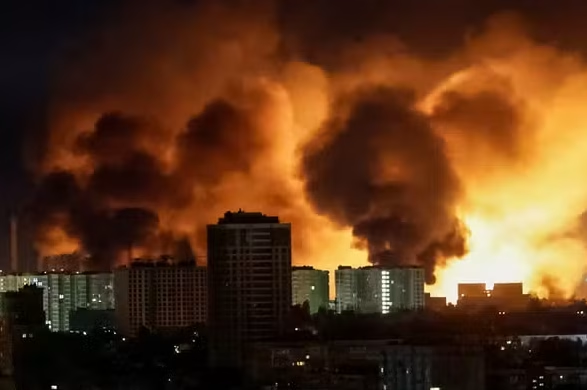
Ukraine endured one of the heaviest overnight attacks in recent weeks as Russian forces launched a major aerial assault beginning late Monday and continuing into Tuesday morning. The Ukrainian air force reported that the strike involved hundreds of drones and a series of missiles, striking multiple regions of the country at a time of heightened international attention on the war.
According to official figures released by Kyiv, Russian forces launched 270 drones and 10 missiles across Ukraine during the operation. Ukrainian defense units managed to intercept or disable 30 of those drones and six missiles, limiting some of the potential damage. Despite those efforts, the air force confirmed that 40 drones and four missiles successfully impacted targets in 16 different locations. Falling debris from intercepted weapons was reported in three other areas, underscoring the risks posed even when air defenses are successful.
The attack marked a sharp escalation compared to recent nights, when Russia had largely relied on smaller-scale strikes aimed at energy facilities, infrastructure, and civilian targets. Ukrainian authorities described this latest barrage as the largest concentrated overnight assault in several weeks, suggesting that Moscow may be testing air defenses or attempting to disrupt internal stability during a politically sensitive moment abroad.
The timing of the assault coincided with Ukrainian President Volodymyr Zelenskyy’s high-profile trip to Washington, where he met with U.S. President Donald Trump alongside a delegation of European leaders. The meetings were intended to underscore continued transatlantic unity in supporting Ukraine’s defense, even as the war enters its third year with no sign of resolution. Analysts note that Russia has frequently escalated military activity to coincide with key diplomatic moments, both as a show of force and as a means of undermining Ukraine’s ability to project strength on the world stage.
The strikes also highlight the ongoing challenge Ukraine faces in defending its vast airspace against a mix of drones and missiles. While Western-provided air defense systems have allowed Ukrainian forces to shoot down a significant portion of incoming threats, the sheer volume of attacks continues to strain resources. Each interception requires costly ammunition, and Ukraine has repeatedly appealed to allies for additional support to sustain its defenses.
Damage assessments from the latest wave were still underway Tuesday morning. Authorities confirmed that the barrage reached a wide range of locations across the country, with both direct strikes and collateral damage from falling debris reported. Although no detailed casualty figures were immediately released, Ukrainian officials acknowledged that the size and scope of the attack were among the most extensive in recent months.
The assault underscores the ongoing pattern of Russian strategy, which has increasingly turned to long-range missile and drone attacks as ground offensives stall along much of the front line. Targeting cities and civilian infrastructure has become a hallmark of these campaigns, creating widespread power outages and attempting to sap civilian morale. For Ukrainians, the latest strike served as another reminder that daily life remains overshadowed by sudden escalations of violence, even as the war drags into its third year.
International observers say the attack will likely amplify calls in Washington and European capitals for increased support, particularly in strengthening Ukraine’s ability to defend its skies. With Kyiv continuing to insist that victory depends on securing its population centers and critical infrastructure, the latest barrage once again highlighted the fragile balance between resilience and vulnerability in a country under sustained assault.
As Ukraine tallied the damage from the largest nighttime bombardment in weeks, Zelenskyy’s message abroad remained consistent: Ukraine cannot face these attacks alone, and international backing will determine the course of the war. Whether the latest strikes will alter the pace or scale of Western assistance remains to be seen, but the overnight assault left little doubt that Russia intends to maintain pressure both on the battlefield and on Ukraine’s civilian population.