


The world did not always move this fast.
There was once a time when Americans woke up to the morning newspaper, waited for the evening broadcast, and went to sleep without a glowing screen delivering headlines every few minutes. News arrived in chapters rather than waves. Information had pauses. Journalism still breathed between deadlines.
Then Ted Turner came along and shattered the clock.
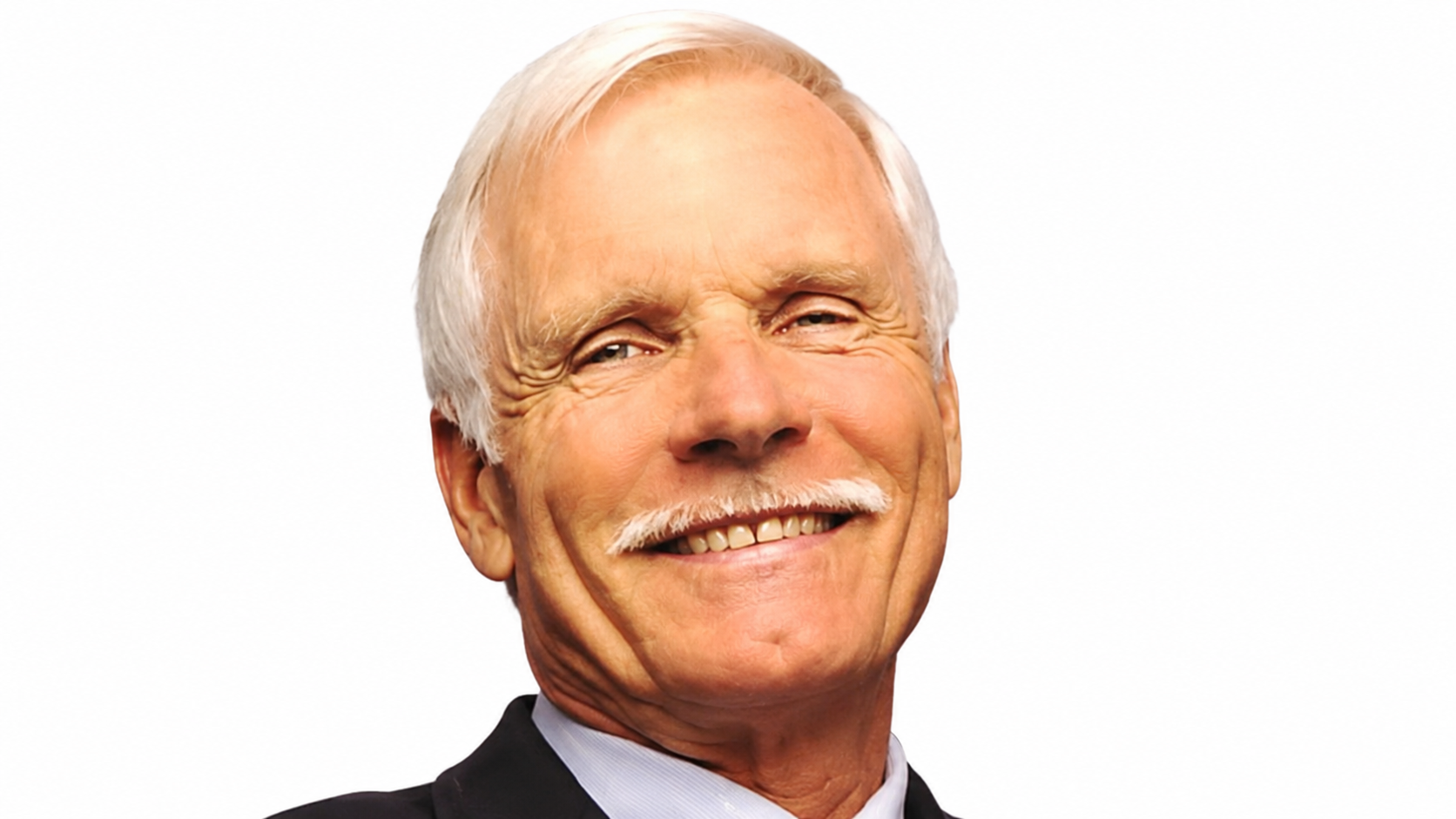
Ted Turner, the fiery media visionary who transformed television journalism by launching the world’s first twenty four hour news network, has died at the age of 87. His death closes the life of a man who did far more than build a cable empire. He altered the pace of modern society itself.
For those in the newspaper industry, Turner’s passing carries a strange mixture of reflection, admiration, and respect. Whether one worked in print, radio, photography, or television, nearly every newsroom in America eventually felt the ripple effect of the gamble he took in 1980 when CNN first signed onto the air.
At the time, many believed the idea bordered on insanity.
The television industry already belonged to established giants. Evening news programs dominated national attention, and most executives viewed news divisions as carefully controlled broadcasts tied to fixed schedules. Turner saw something entirely different approaching over the horizon. He believed technology was about to erase those schedules forever.
He believed people would want immediate access to the world around them at any hour of the day or night.
Most of the industry laughed at him for it.
Turner ignored them.
Born in Cincinnati in 1938 and later raised in the South, Turner inherited his father’s billboard advertising business following a devastating family tragedy. From there, he built aggressively, purchasing struggling television stations and turning them into something larger than traditional broadcasting had ever attempted. Loud, competitive, stubborn, and often unpredictable, Turner carried the energy of a man who seemed permanently convinced the future belonged to those willing to outrun caution.
That mindset built CNN.
The network launched on June 1, 1980, from Atlanta, Georgia, with far fewer resources than the major broadcast networks it hoped to challenge. Critics predicted financial collapse. Some television veterans openly mocked the idea that viewers would sit through continuous news coverage around the clock. Yet Turner pressed forward with the kind of confidence that only visionaries or gamblers usually possess.
In the end, he proved to be both.
CNN slowly gained traction before permanently changing global journalism during the Gulf War in 1991. As missiles lit up the Baghdad skyline live on television, audiences around the world realized something profound had changed. News no longer waited for tomorrow morning. History was unfolding directly in front of them.
That moment became a turning point not just for cable television, but for journalism itself.
Every major network adapted. Local stations adapted. Newspapers adapted. The internet eventually adapted around the same expectation Turner had seen years earlier: people no longer wanted delayed information. They wanted to witness events as they happened.
The modern breaking news era was born from that vision.
Yet reducing Ted Turner’s life to CNN alone would miss the scale of what he accomplished. His influence spread across sports, entertainment, film preservation, and environmental conservation. Turner Broadcasting expanded into networks that reshaped cable television, including TBS, TNT, Cartoon Network, and Turner Classic Movies. He transformed the Atlanta Braves into a nationally recognized franchise through televised broadcasts that reached millions of homes far beyond Georgia.
He also became one of America’s largest private landowners and devoted enormous energy toward wildlife restoration and conservation efforts throughout the American West. His ranches became known for restoring bison herds and preserving open land at a scale few private citizens ever attempted.
Turner’s philanthropy reached beyond national borders as well. In 1998, he pledged $1 billion to support United Nations initiatives, one of the largest charitable donations made by a private individual at the time. While his outspoken personality sometimes generated controversy, even critics often acknowledged the sincerity behind his efforts to address environmental concerns, nuclear threats, and humanitarian causes.
In later years, Turner spoke publicly about his declining health after revealing he had been diagnosed with Lewy body dementia, a progressive neurological disorder sharing characteristics with Alzheimer’s and Parkinson’s disease. Despite those struggles, he remained deeply connected to the legacy of the industry he helped create.
For journalists, his death feels personal in a way difficult to fully explain outside the profession.
Every newsroom deadline accelerated because of Ted Turner. Every live truck parked outside a courthouse, every breaking weather interruption, every election night countdown, every international crisis unfolding live across screens carries traces of the world he built. Love it or criticize it, modern news culture still operates inside the framework he imagined decades ago when others said it could never work.
There is something fitting about the fact that Turner never truly fit comfortably into one category. He was part businessman, part showman, part risk taker, part conservationist, and part dreamer. He frustrated competitors, inspired journalists, terrified executives, and forced an entire industry to rethink itself.
Most importantly, he believed information mattered.
That belief changed journalism forever.
Long after the headlines surrounding his death fade from television screens and newspaper pages alike, the machine Ted Turner created will continue running twenty four hours a day, seven days a week, without pause.