


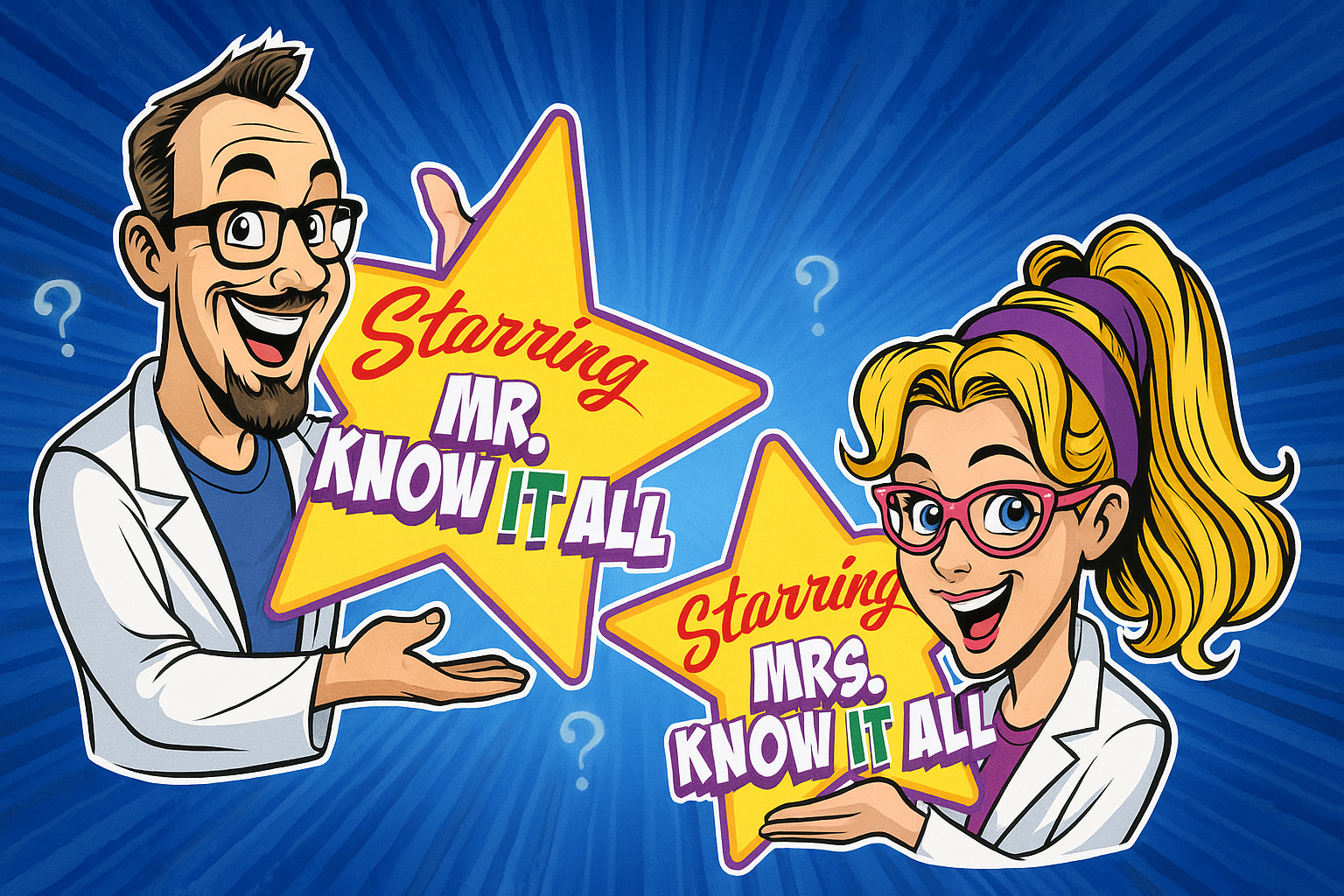
Every town has them—the self-proclaimed experts who can outdo, outthink, and outtalk everyone in the room. They are the one-uppers, the people who seem to believe that conversation is a competition and humility is a weakness. We’ve all met them at one time or another. You share an experience, and before you can finish, they jump in with a story that somehow eclipses yours. You mention your years of experience, and suddenly, they’ve done it longer, better, and with more flair—at least in their minds.
In the world of work, the one-upper is particularly insufferable. There’s something almost insulting about someone with no real understanding of your craft lecturing you on how to do it. You could spend decades mastering your field—thirty years refining, learning, failing, succeeding—and along comes a self-appointed know-it-all who’s never set foot in your profession, ready to explain it all to you. It’s not confidence they project; it’s insecurity disguised as authority. They crave validation through the illusion of superiority, needing others to believe they know something about everything, when in truth, they often know very little about anything.
This kind of personality infects communities too, especially smaller ones where reputations and politics intertwine. In Josephine County, it feels as though the one-uppers have formed their own secret society—a club of contrarians who can’t resist claiming insider knowledge about every local issue, from government budgets to community projects, without ever showing up to a meeting or reading a single report. They dominate conversations, correct people who don’t need correcting, and invent expertise where none exists. It would almost be comical if their arrogance didn’t make genuine progress so difficult.
The one-upper of knowledge is particularly dangerous when it seeps into leadership and public discourse. When those in positions of influence pretend to understand complex systems—legal, financial, or procedural—without actually doing the work, communities suffer. When people in power dismiss experts, ignore data, or talk over those who know better, bad decisions follow. And when those same figures double down instead of admitting their mistakes, the fallout can last for years. That’s when the one-upper stops being merely annoying and becomes destructive.
It’s one thing to brag at a barbecue, but it’s another to undermine credibility and spread misinformation for the sake of ego. The Josephine County one-uppers, in all their bluster, have turned public life into a performance of who can pretend the hardest. They don’t just talk over others; they drown out reason, integrity, and accountability. And while they may believe they’re winning some invisible argument, the truth is that everyone else loses—the residents, the workers, the journalists, and the honest public servants who actually care about getting things right.
Maybe there really is a local club for them somewhere, hosted by the high priestess of false confidence herself, Shirley Johnson, with a motto that reads: “Why learn when you can pretend?” It would almost be funny if it weren’t so real. But as those who value truth and authenticity know all too well, the cure for the one-upper isn’t confrontation—it’s exposure. The louder they boast, the clearer it becomes who really knows what they’re talking about.