


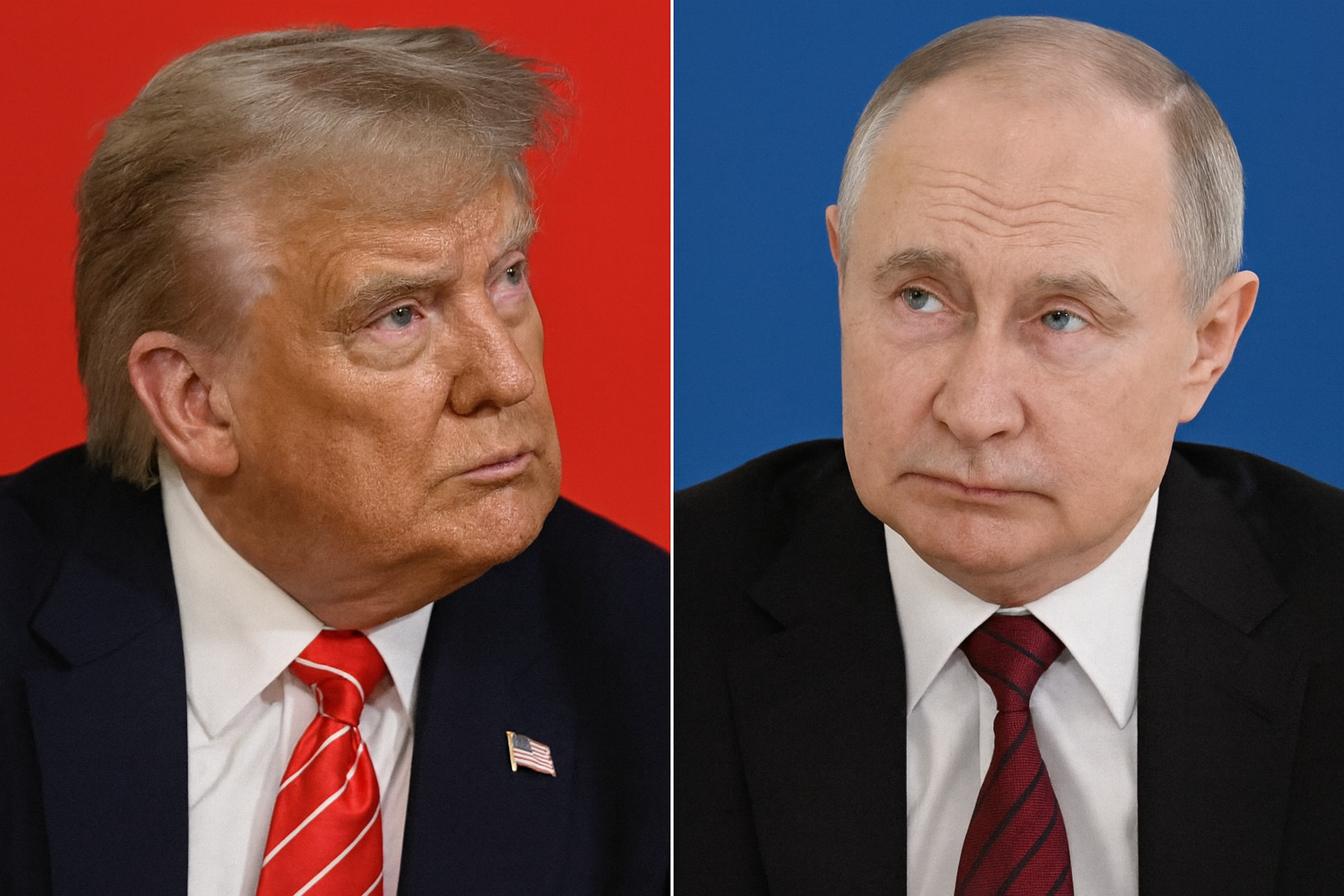
President Donald Trump has confirmed plans for a face-to-face meeting with Russian President Vladimir Putin in Alaska on August 15, marking a potentially significant step in efforts to end a war that has persisted for more than three years. The announcement, made Thursday from the White House, comes as world leaders scramble to assess the implications for the conflict’s future and the role of Ukraine in any agreement.
The meeting will take place in Anchorage, selected for its strategic position between Washington and Moscow. According to U.S. officials, the discussions are intended to “continue negotiations” aimed at reaching a settlement, though details about the agenda remain limited. Both governments have previously engaged in indirect talks, but this will be the first in-person encounter between Trump and Putin since the war began.
The conflict, which has claimed tens of thousands of lives and displaced millions, has been a central issue in U.S.-Russia relations since its outbreak. Multiple rounds of negotiations over the years have failed to produce a lasting ceasefire, with each side accusing the other of undermining diplomatic efforts.
European leaders, particularly in NATO member states, responded to Thursday’s announcement with a mix of cautious optimism and concern. Diplomats from the European Union said they are seeking assurances that Ukraine, whose territory and sovereignty remain at the heart of the dispute, will not be excluded from any decisions that could shape its political and territorial future.
Ukrainian officials have yet to confirm whether they have been invited to participate in the Alaska talks. The government in Kyiv has previously stated that it will not accept any settlement negotiated without its direct involvement. In recent months, Ukrainian President Volodymyr Zelensky has pushed for broader international mediation, involving both Western allies and neutral parties, to ensure the country’s interests are represented.
The choice of Alaska as a venue underscores the symbolic and logistical factors at play. The state has historically served as a meeting ground for U.S.-Russian diplomacy, given its geographic proximity to Russia and its role in Cold War-era cooperation and competition. Anchorage, in particular, has hosted several bilateral summits on environmental, trade, and security issues.
The White House has not disclosed the length of the meeting or the specific topics to be addressed beyond the overarching goal of ending the war. Analysts say the talks are likely to cover a range of contentious issues, from territorial boundaries and security guarantees to sanctions relief and the role of international peacekeeping forces.
As some foreign policy experts have welcomed the prospect of renewed dialogue, others warn that without a clear framework and participation from all, the Alaska meeting could risk sidelining critical parties and producing only symbolic progress.
For now, global attention is fixed on Anchorage, where the August 15 meeting could either open the door to a breakthrough or reaffirm the deep divisions that have kept the conflict alive for more than three years.