


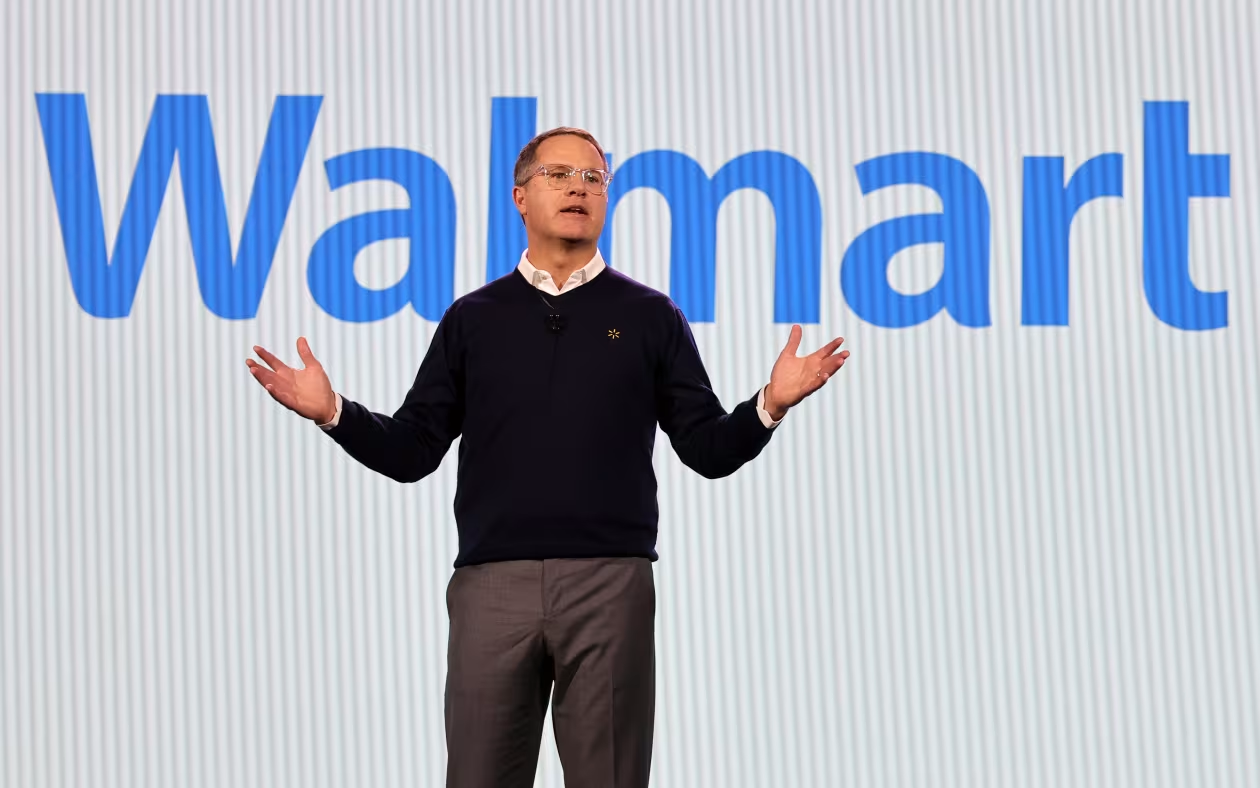
Walmart, the largest retailer in the United States and one of the most influential companies in the global marketplace, is entering a significant leadership transition as CEO Doug McMillon prepares to step down after more than a decade at the helm. The move, announced in mid November, signals the beginning of a new era for the retail giant as it positions itself for the technological and economic challenges ahead. McMillon, who has guided the company through major shifts in e commerce, automation and digital modernization, will retire from the role on January thirty first of 2026. John Furner, the current head of Walmart U S, will assume the position of global CEO the following day.
McMillon’s departure is being framed as a planned succession rather than a sudden or forced exit. Walmart’s board and leadership team have emphasized that the transition marks a natural endpoint of a transformative phase that has reshaped the company’s operations and strengthened its competitive position. After stepping down, McMillon will remain on Walmart’s board of directors through the next shareholder meeting and continue advising the company into early 2027. His exit concludes an eleven year tenure that has seen the retailer confront rising competition from Amazon, supply chain disruptions, and sweeping consumer behavior changes.
His time as CEO coincided with one of the most volatile periods in modern retail. Under his leadership, Walmart executed major overhauls to its logistics network, expanded grocery delivery and curbside programs, invested heavily in automation, and grew its e commerce division into a multibillion dollar pillar of the company. Industry analysts note that Walmart under McMillon became more technologically adaptive and strategically aggressive, often embracing innovations at a pace that surprised critics who once viewed the retailer as slow to evolve.
Multiple business and financial news outlets report that the timing of McMillon’s retirement aligns with the company’s need to shift from transformation to long term optimization. Walmart is expected to lean even more heavily on artificial intelligence, robotics, automated fulfillment, and data driven operations in the coming years. As supply chain costs rise and labor markets continue to fluctuate, the next phase of Walmart’s growth will likely require leadership deeply versed in operational execution and domestic retail performance. Furner, a lifelong Walmart insider and the company’s U S chief, is seen as a choice that provides continuity rather than disruption.
Reports from international and U S based business publications describe Furner as a strategic operator who understands both the culture and the complexity of Walmart’s domestic footprint. His role overseeing Walmart U S has given him experience with the company’s largest and most financially significant segment during a period of inflation, rapid automation rollout and consumer uncertainty. Industry analysts interpret the promotion as a signal that Walmart intends to preserve the momentum built under McMillon while sharpening its focus on internal efficiency and customer experience.
Although the company has not tied McMillon’s retirement to any controversy, performance issue or external pressure, some experts suggest that the timing reflects the broader trend of long serving CEOs stepping aside during pivotal technological shifts. Retail is entering an era defined by machine learning driven forecasting, warehouse robotics, and digital storefront competitiveness. These shifts require a level of sustained forward focus that some boards prefer to entrust to leaders selected specifically for the next stage of growth.
Three major outlets reporting on the transition describe it as a carefully orchestrated handoff designed to maintain investor confidence and avoid operational disruption. McMillon leaves behind a company that is financially strong, technologically enhanced and well positioned for continued dominance in the U S and international markets. With consumer expectations rising and competition intensifying, Walmart’s leadership shift arrives at a moment when the company’s long term strategy requires both stability and fresh direction.
As Walmart looks toward 2026 and beyond, the transition from McMillon to Furner represents a strategic recalibration rather than a dramatic pivot. The company is preparing for a retail landscape where digital fluency, relentless efficiency and rapid innovation will define the winners. Walmart’s board believes this succession positions the company to meet those demands while preserving the stability that has allowed it to remain one of the world’s most enduring retail forces.