


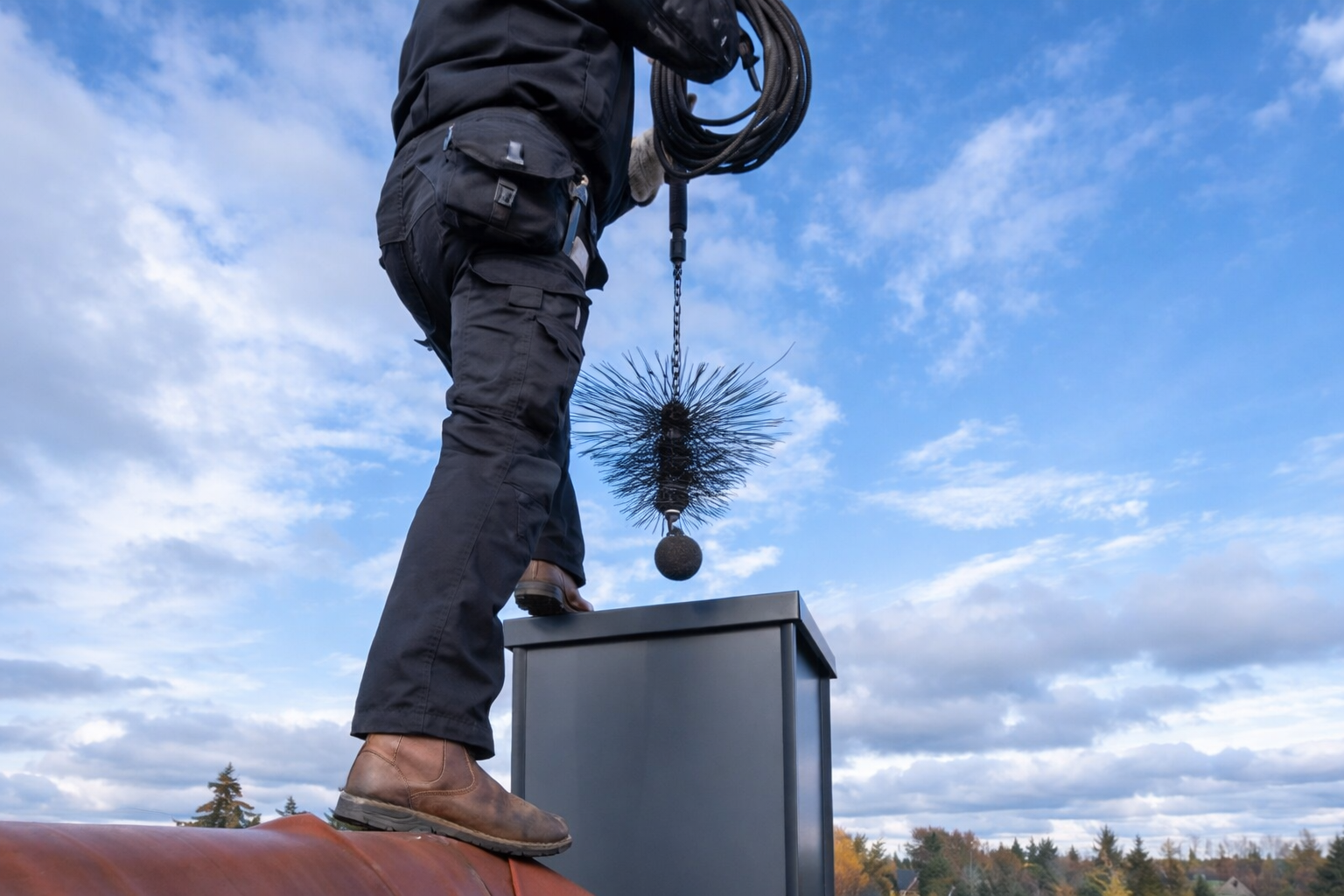
As winter settles into Southern Oregon and temperatures continue to drop, fireplaces and wood stoves once again become a common source of warmth in many households. While the comfort of a fire is familiar, the risks associated with an unmaintained chimney are often overlooked. Proper chimney cleaning, sweeping, and seasonal inspection are essential steps in protecting homes, families, and property during the colder months ahead.
Chimneys accumulate soot, ash, and creosote every time wood is burned. Creosote, a sticky and highly flammable byproduct of incomplete combustion, is the leading cause of chimney fires. Even a thin layer can ignite under high temperatures, sending flames into the flue and potentially spreading into the home’s structure. Regular chimney cleaning dramatically reduces this risk and is widely regarded as the most effective way to prevent fireplace related house fires.
For Southern Oregon residents who have not yet used their fireplace or wood stove this season, early winter is the ideal time to ensure everything is safe and functional. One of the most reliable ways to address chimney care is to schedule a professional chimney sweep. Certified chimney professionals are trained to remove dangerous buildup, inspect the flue, cap, liner, and firebox, and identify structural issues such as cracks, blockages, or animal nests that may restrict airflow or cause smoke to back up into living spaces.
Homeowners can also take several preliminary steps on their own before lighting the first fire of the season. A visual inspection from inside the home can reveal obvious concerns such as loose bricks, excessive soot, or debris falling into the firebox. Outside, checking that the chimney cap is intact and free from obstructions helps ensure proper ventilation and keeps rain, birds, and small animals out. Any unusual odors, poor draft, or visible residue are signs that professional attention is needed before use.
Another important aspect of chimney care is understanding how burning habits affect buildup. Burning seasoned hardwood that has been properly dried produces less creosote than wet or green wood. Avoiding trash, cardboard, and treated lumber also reduces residue and toxic emissions. Even with good burning practices, annual cleaning remains necessary, especially for homes that rely heavily on wood heat throughout the winter.
Southern Oregon’s colder weeks ahead mean many households will soon depend on fireplaces daily rather than occasionally. If a chimney has not been cleaned recently, now is the time to act. Waiting until after heavy use begins increases both fire risk and the likelihood of discovering problems when immediate repairs are harder to schedule.
Chimney maintenance is not simply a matter of efficiency or comfort; it is a core safety responsibility for homeowners. A clean, properly inspected chimney supports better indoor air quality, improved heating performance, and most importantly, peace of mind. As winter deepens, taking the time to ensure chimney safety today can prevent emergencies tomorrow and help Southern Oregon residents enjoy the season with warmth and confidence.