


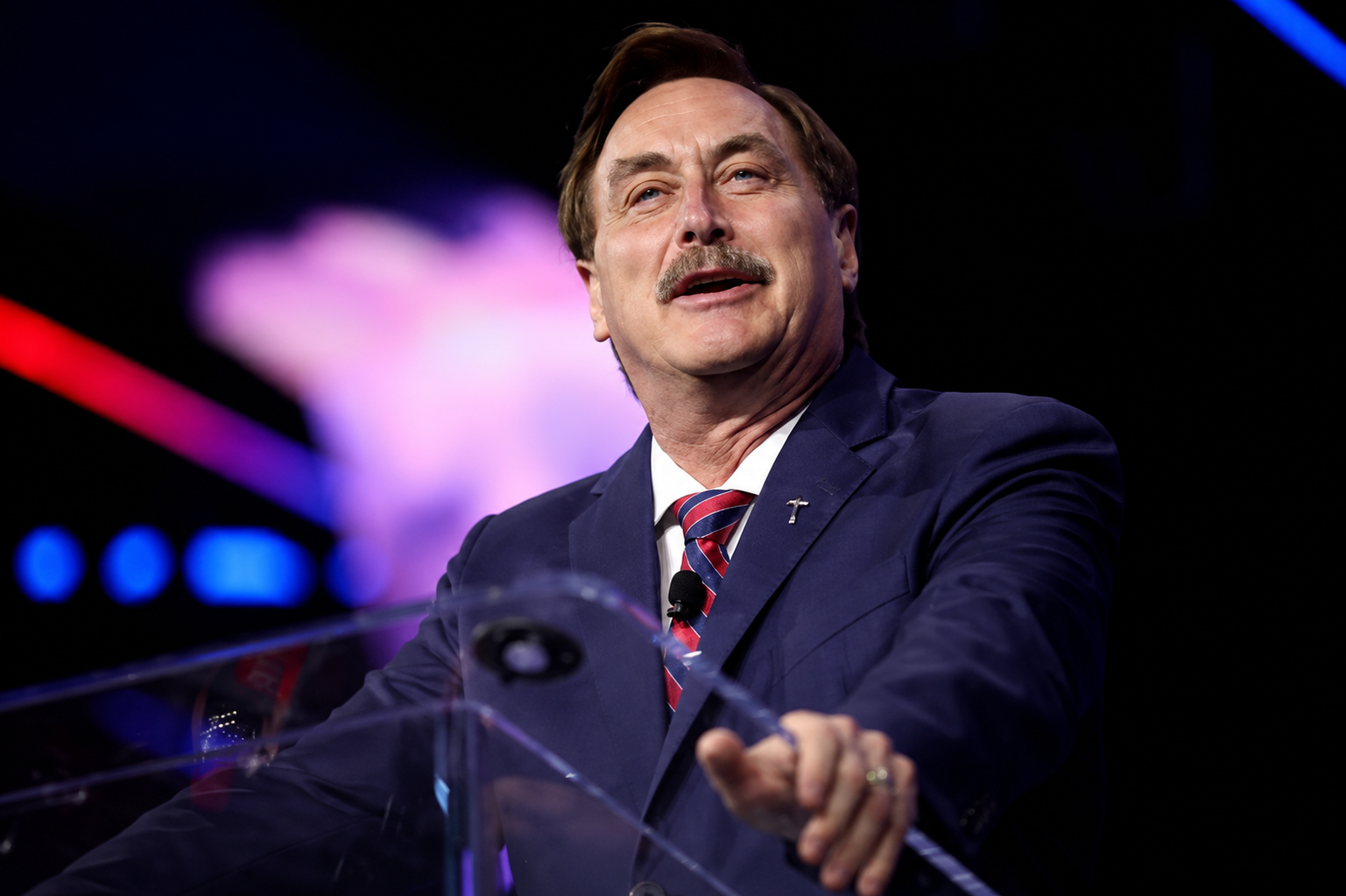
Mike Lindell, the entrepreneur who transformed MyPillow from a Minnesota startup into a nationally recognized consumer brand before becoming one of President Donald Trump’s most visible political allies, has stepped down as chief executive of the company he founded more than two decades ago.
The leadership change, announced this week, marks a significant shift for Lindell, whose personal identity, political activism and business interests have become closely connected during his years in the national spotlight. Lindell said he is leaving the chief executive position to devote his attention to his Republican campaign for governor of Minnesota ahead of the state’s August 11 primary election.
James Furlong has been selected to take over as MyPillow’s chief executive. Furlong is not a newcomer to the company, having previously served as its president from 2004 through 2019. Lindell will retain a minority ownership interest in MyPillow and remain a member of its board of directors, but he will no longer oversee the company’s daily operations.
The move ends Lindell’s 22 year tenure at the head of the company he launched in Minnesota in 2004. MyPillow grew from a small business marketed at trade shows into a prominent direct to consumer company, aided heavily by television advertising and infomercials featuring Lindell himself. His distinctive commercials made him inseparable from the brand and eventually turned the businessman into a nationally recognizable figure.
Lindell’s public profile changed considerably as he became increasingly active in Republican politics. He emerged as a prominent supporter of Trump and later became one of the country’s most outspoken advocates of claims challenging the results of the 2020 presidential election. Those activities brought Lindell greater political recognition while also contributing to years of litigation and financial pressures involving both him and his business interests.
His departure from MyPillow’s executive office comes as the company faces substantial financial challenges. Recent court records and reporting by Minnesota news organizations show MyPillow facing more than $25 million in creditor claims and judgments connected with unpaid business obligations.
Among the largest is a judgment exceeding $15 million involving a longtime supplier of slippers. FedEx has also secured an award approaching $9 million in a dispute involving unpaid shipping expenses, while several additional judgments against the company collectively total millions of dollars.
Those financial problems provide an important backdrop to the corporate transition, although Lindell has characterized his departure as a decision driven by the demands of his gubernatorial campaign rather than an exit from MyPillow altogether. His continued position on the board and minority ownership stake leave him financially connected to the company even as Furlong assumes responsibility for its operations.
Lindell has also faced separate legal battles stemming from his election related activities. He has been involved in multiple defamation cases arising from statements concerning voting technology and the 2020 election. Some proceedings have resulted in judgments against him, while others have been overturned, resolved or settled. The litigation has added another complicated dimension to a business and political career that has increasingly moved beyond the pillow company that originally made him famous.
His latest transition places politics squarely at the center of his immediate future.
Lindell is seeking the Republican nomination for Minnesota governor in a competitive primary that includes Minnesota House Speaker Lisa Demuth and businessman Kendall Qualls. Trump has endorsed Lindell, providing his campaign with support from the most influential figure in the national Republican Party as voters prepare to select their nominee.
The race represents Lindell’s most ambitious attempt to move from political advocacy into elected office. He previously sought the chairmanship of the Republican National Committee in 2023 but received only a small number of votes from committee members.
Lindell formally entered the Minnesota gubernatorial race in late 2025. His campaign has since attempted to convert his national recognition and relationship with Trump into support among Republican primary voters.
The election also represents a significant test of whether Lindell’s prominence within conservative political circles can translate into success at the ballot box. While his name recognition exceeds that of many first time statewide candidates, he is competing against Republicans with established political and organizational backgrounds in Minnesota.
The MyPillow leadership change therefore arrives at an unusual intersection of business, politics and personal reinvention. Lindell is not selling his entire interest in the company, nor is MyPillow shutting down or abandoning the brand he built. Instead, operational control is being transferred to an executive with extensive previous experience inside the company while its founder concentrates on a statewide political campaign.
For MyPillow, the transition begins a new chapter after more than two decades under the direct leadership of the man who became the face of its products.
For Lindell, stepping away from the chief executive’s office represents something considerably different. The businessman whose television advertisements introduced him to millions of Americans is now placing his immediate future in the hands of Minnesota voters, trading the daily management of MyPillow for a full time campaign to become the state’s next governor.