


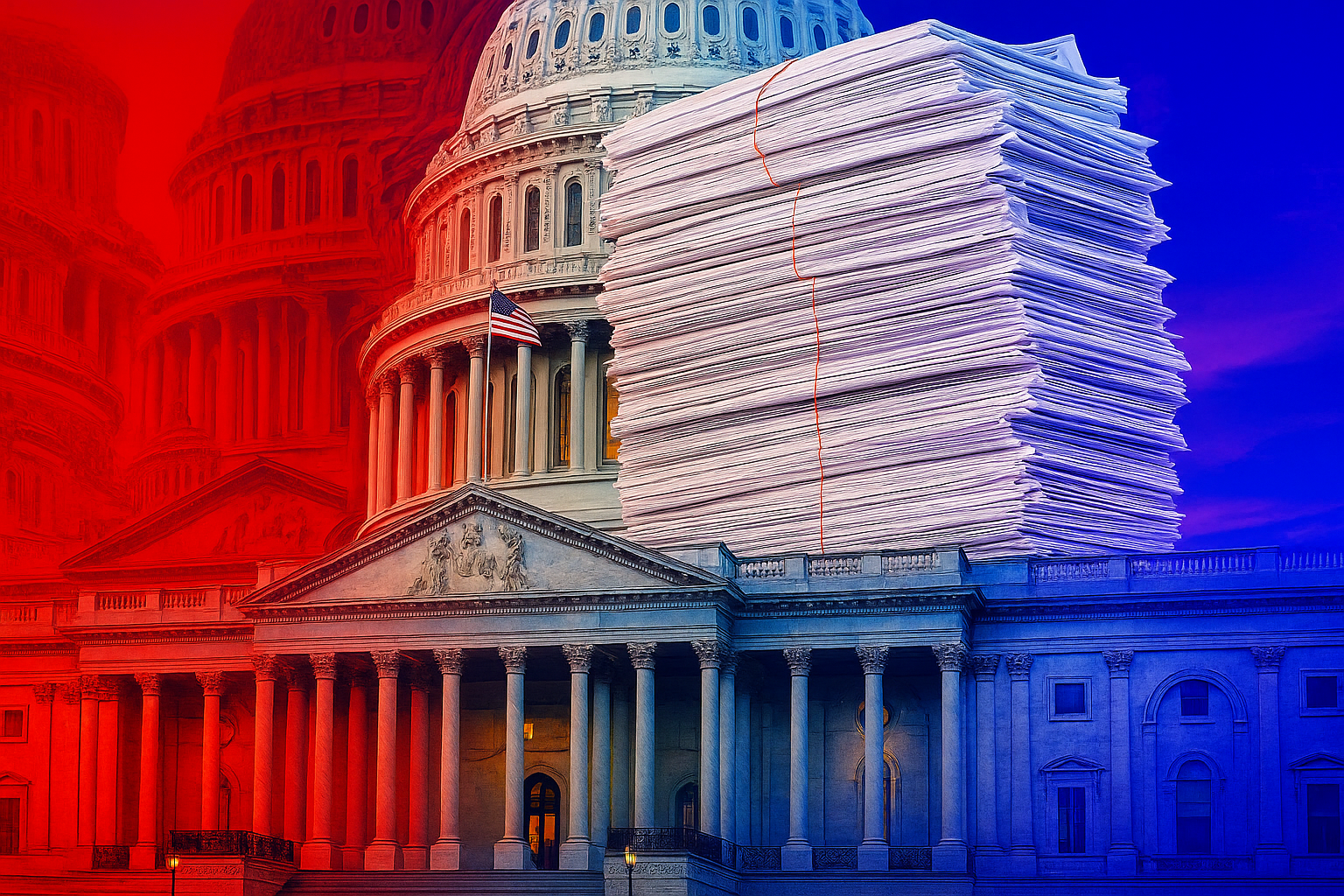
As the Fourth of July approaches, the U.S. Senate finds itself entrenched in one of the most pivotal legislative showdowns in recent years. At the center of the debate is the so-called “One Big Beautiful Bill,” a sweeping legislative package that merges tax policy, healthcare reform, energy rollbacks, welfare changes, and an expanded debt ceiling—crafted in the image of former President Donald Trump’s economic vision. The measure narrowly passed the House in late May, and now teeters on a knife’s edge in the Senate, where its fate could shape America’s financial and social policy for the next decade.
The bill spans over 900 pages and aims to lock in the 2017 tax cuts permanently, restore full business expensing, shrink the state and local tax deduction cap, slash Medicaid spending, and roll back green energy incentives that were part of the Biden-era Inflation Reduction Act. It also introduces work requirements for Medicaid and SNAP recipients and authorizes a multitrillion-dollar increase to the debt ceiling. Each of these provisions comes with a complex set of implications, and together they form one of the most ambitious and controversial legislative packages in recent memory.
After advancing through the House on a razor-thin 215-214 vote, the bill entered the Senate chamber amid internal fractures within the Republican majority. While Senate leaders are pushing to have it passed before the holiday recess, moderate Republicans and hardline fiscal conservatives alike are complicating the path forward. Several GOP senators have voiced deep concerns about specific elements—particularly the steep Medicaid cuts and the aggressive size of the debt ceiling increase—highlighting the fine line Republican leadership must walk to secure final passage.
The nonpartisan Congressional Budget Office estimates that the package, if enacted in full, would add over $3.3 trillion to the national debt over the next ten years. Simultaneously, it forecasts that more than 11 million Americans could lose health insurance coverage as a result of the proposed Medicaid rollbacks and work requirements. These projections have fueled concern across the political spectrum, even as Republican leadership emphasizes the need to make tax relief permanent and rein in what they characterize as bloated welfare spending.
As the Senate moves into the final procedural phase known as the “vote-a-rama”—a non-stop sequence of amendment votes—lawmakers are bracing for a drawn-out battle. Dozens of proposed changes are expected to be introduced, debated, and voted on, one after another, without breaks. If passed unamended, the bill would head straight to the president’s desk. However, if changes are made, it must return to the House for another vote, setting up a potential last-minute showdown before the July 4 recess.
One of the most contentious elements is the rollback of clean energy tax credits, a move that industry leaders warn could hinder innovation and derail private investment in the green sector. Critics argue that slashing incentives for solar, wind, and electric vehicles undermines long-term climate goals and cedes leadership in clean technology to foreign competitors. Supporters of the bill, however, contend that the current subsidies are too generous and distort market competition.
The bill’s treatment of the state and local tax deduction has also drawn backlash, particularly from suburban lawmakers whose constituents rely on those deductions to offset high property taxes. While the House version capped deductions at $40,000 for households earning under $500,000, the Senate version cuts that back dramatically, prompting further discontent within Republican ranks.
For everyday Americans, the outcome of this legislation will touch almost every corner of life. Income tax brackets, child tax credits, and standard deductions are all on the table. Healthcare access through Medicaid and food assistance through SNAP could shrink dramatically depending on how eligibility and funding are revised. The national debt ceiling hike would give the federal government room to borrow trillions more over the coming years, but critics fear it does so without enough fiscal discipline to offset new spending.
With the clock ticking, Senate Republicans must now thread the needle between ideological purity and political pragmatism. Should the bill pass the Senate and be signed into law, it would represent a defining policy achievement for the GOP—and signal a dramatic pivot away from many Biden-era priorities. Should it fail, it could mark a significant political defeat, with the 2026 midterm elections looming and public opinion deeply divided.
The “One Big Beautiful Bill” has become more than just legislation; it has become a referendum on America’s direction—fiscally, socially, and politically. As lawmakers trade amendments and make final arguments this week, the stakes could not be higher. Whether this bill ultimately becomes law or dies in the chamber, it will undoubtedly be remembered as a flashpoint in America’s ongoing struggle to define its future.