


The world has a way of circling back on itself. Those who have lived long enough, and especially those who have served in uniform, recognize that uneasy feeling when the language of Washington begins to shift and the justifications for force start to sound suspiciously polished. Watching the United States explain the capture of Venezuelan leader Nicolás Maduro as a bold stand against narco-terrorism has brought that feeling rushing back for me. It is déjà vu all over again.
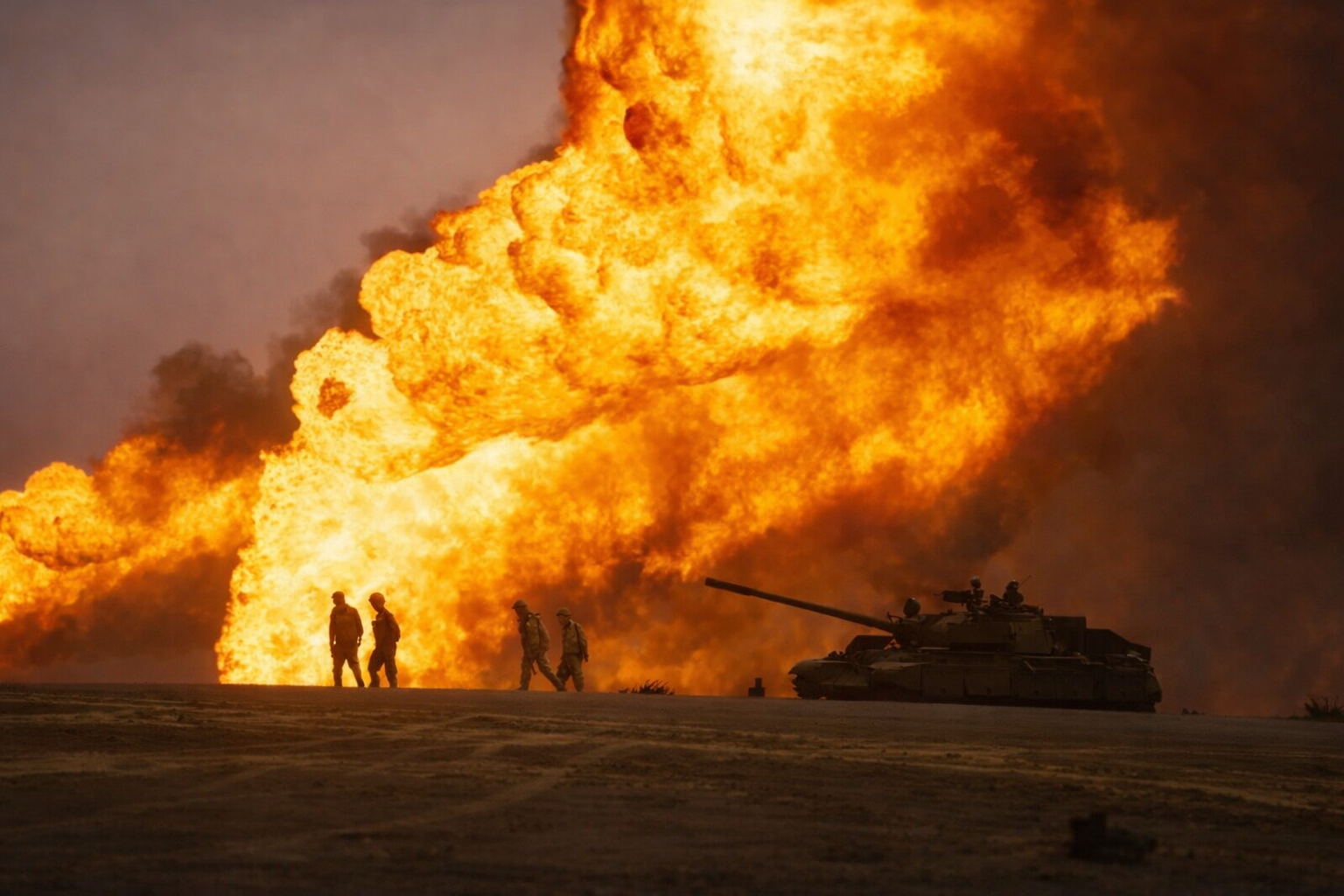
I joined the U.S. Marines in 1990, at a time when America was gearing up for the first Gulf War. Back then we were told, repeatedly and emphatically, that the coming conflict with Iraq was not about oil. We were assured it was about protecting civilians, defending sovereignty, and maintaining global stability. Many of us believed that because we wanted to believe it. Trust in civilian leadership is part of military culture. Only years later did the record make clear what so many ordinary Americans had quietly suspected from the start. Resources and strategic positioning were always at the heart of it.
That is why the events unfolding in Venezuela cannot be viewed in isolation. The United States has long accused Maduro of involvement in massive cocaine-trafficking conspiracies, allegations that have been circulating since at least 2020. Drug trafficking is a real problem in the Western Hemisphere. No honest observer denies that. But the credibility of the current crackdown rings hollow when measured against the contradictions of American politics. The same administration now proclaiming moral outrage over narcotics has just shown leniency to one of the largest convicted drug traffickers in modern history. Selective enforcement is not a principle. It is a tactic.
Venezuela happens to sit atop the largest proven oil reserves on the planet. That is not an opinion. That is a geological fact. When a nation so rich in energy suddenly becomes the target of sanctions, military rhetoric, and a cross-border seizure of its sitting president, skepticism is more than understandable. It is mandatory. The capture of Maduro has already sparked protests and diplomatic condemnation across the globe, with Venezuelan and Cuban officials reporting deaths and injuries resulting from the operation. Whether those casualty claims prove fully accurate or not, the raid has undeniably pushed the region closer to open conflict.
The official story being offered to the public is that this was a law-enforcement action, a dramatic arrest of a criminal figure to face U.S. charges in a Manhattan courtroom. Yet to me the operation looked far less like police work and far more like an act of war. Foreign leaders are not normally hauled out of their own capitals by armed troops while bullets are flying and governments are left reeling. That kind of action changes more than a legal case. It alters the balance of power and the stability of an entire continent.
In my opinion, this should never have happened the way it was conducted. If Maduro was truly to be pursued for organized crime, the matter should have been handled through international courts, extradition agreements, and lawful diplomatic channels. Instead the United States chose spectacle over process. The raid became the headline. The courtroom became the backdrop. And once again Americans are being asked to accept a simplified narrative while the deeper economic motivations remain conveniently out of focus.
I have covered politics for many years now as the owner and publisher of this newspaper. I have written about budgets, grants, ethics complaints, and local transparency issues here at home in Josephine County. The same standards apply abroad. Governments should be held accountable, but they should also be honest about what they are doing. Layering oil-sector promises onto a militarized drug narrative feels to me like nothing more than another grab for control of energy under a safer brand name. Call it narco-terrorism, and they may get away with it. That is the lesson history taught my generation.
None of this makes the Venezuelan government innocent. Corruption deserves exposure wherever it exists. But Americans deserve something as well, the unvarnished truth. We were promised an end to endless wars. We were told the era of reckless intervention was over. Instead we find ourselves sliding back toward confrontation with a resource-rich country that suddenly needs to be liberated or rebuilt by U.S. oil companies.
The desert echo is unmistakable. The rhyme is clear. When war is rebranded as security theater, the outcome is almost always the same. Ordinary people pay the price while powerful interests quietly count the barrels. As a Marine Corps veteran who remembers how the last song ended, I cannot ignore the music this time.