


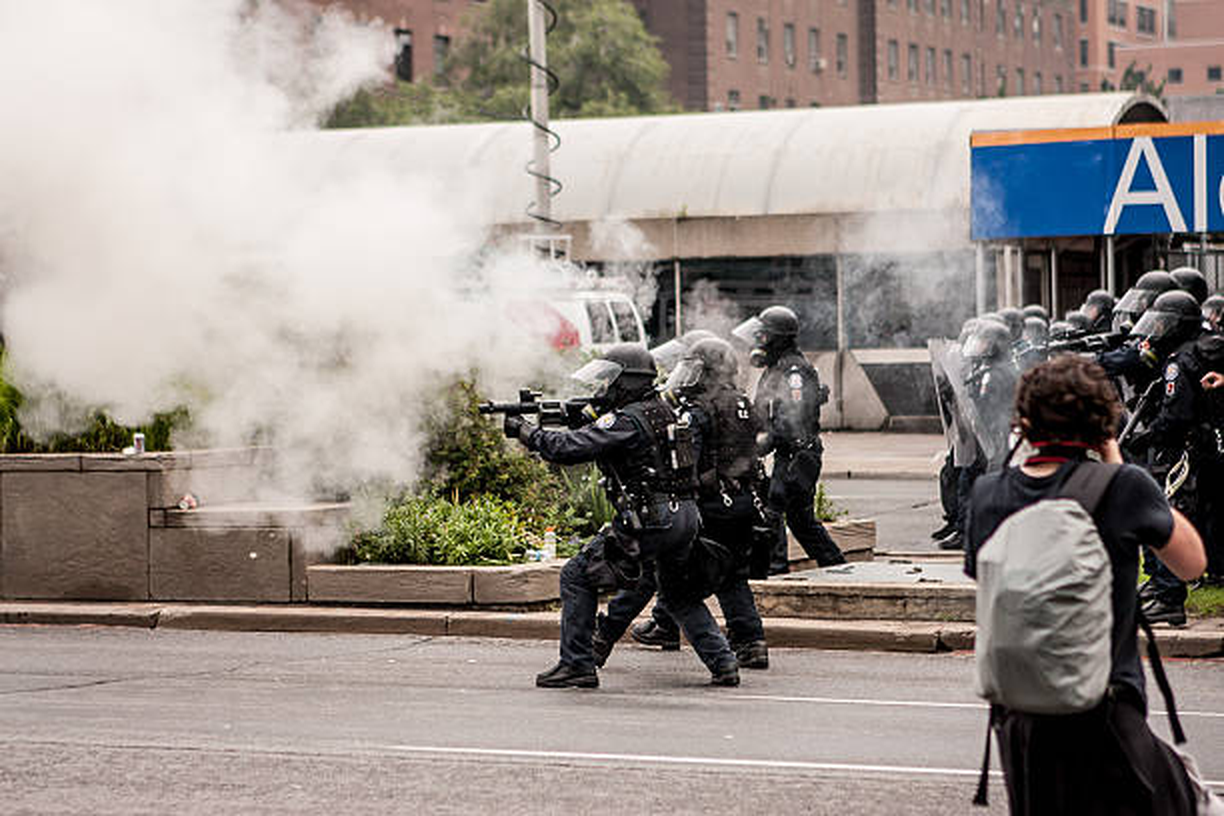
A federal court ruling in Oregon has placed new restrictions on the use of tear gas and other crowd control weapons by federal officers during protests in Portland, marking another chapter in the city’s long-running legal battles over how law enforcement responds to demonstrations.
The decision stems from ongoing protests outside the U.S. Immigration and Customs Enforcement facility located in Portland’s South Waterfront district. Demonstrations at the site have occurred intermittently since mid-2025 and have drawn attention from civil liberties groups, local residents, and federal authorities. As tensions surrounding the protests grew, legal challenges were filed arguing that the federal government’s response had crossed constitutional boundaries.
In response to those claims, a federal judge issued a preliminary injunction that limits how and when chemical crowd control agents such as tear gas may be deployed by federal officers assigned to the facility. The ruling states that chemical agents and projectile munitions may only be used when officers face an immediate threat of physical harm to themselves or others. The order effectively prohibits the routine use of tear gas for the purpose of dispersing crowds during demonstrations.
The court also addressed concerns surrounding the use of impact projectiles and similar weapons. Under the ruling, federal agents are restricted from targeting the head, neck, or torso of individuals unless circumstances justify the use of deadly force. The restrictions remain in effect while the broader civil rights lawsuits that prompted the decision continue to move through the federal court system.
One of the primary legal challenges leading to the ruling was brought by residents living near the federal immigration facility. The plaintiffs include tenants of a nearby affordable housing complex who argued that tear gas deployed during protests repeatedly drifted into their apartments. According to court filings, residents described chemical irritants entering homes through open windows, ventilation systems, and doorways during large demonstrations.
The lawsuit asserted that the exposure affected families, elderly residents, and individuals with existing health conditions who were not participating in the protests. The court determined that the concerns raised by nearby residents presented credible constitutional questions regarding public safety and the impact of law enforcement tactics on people living in the surrounding neighborhood.
A separate lawsuit filed by protesters and journalists also contributed to the court’s review of federal policing practices in Portland. That case alleges that the use of chemical agents and crowd control projectiles interfered with First Amendment protections, including the right to peacefully assemble and document public demonstrations.
The legal dispute reflects a broader national debate over protest policing and the balance between public safety and civil liberties. Portland has frequently served as a focal point in that debate, particularly following the widely publicized demonstrations of 2020 when federal and local law enforcement responses to protests drew national scrutiny.
Since that time, multiple lawsuits and policy changes have attempted to clarify the circumstances under which chemical agents and other crowd control tools can be used. The most recent ruling adds another layer of legal oversight, specifically addressing federal officers operating at the immigration facility.
Federal prosecutors have reported that dozens of individuals have faced charges connected to incidents during recent demonstrations, including allegations of property damage and confrontations with officers. Civil rights advocates, however, continue to argue that aggressive crowd control tactics have escalated tensions during protests.
The court’s current order is considered a preliminary measure, meaning it establishes temporary limits while the lawsuits proceed toward potential trial or settlement. Additional rulings in the coming months could determine whether the restrictions remain in place permanently or are modified based on further legal findings.
For Portland and the broader state of Oregon, the case highlights ongoing legal questions surrounding protest rights, law enforcement authority, and the responsibilities of federal agencies operating within local communities. As the litigation moves forward, the outcome may influence how demonstrations are managed not only in Portland but also in other cities facing similar conflicts between public protest and government enforcement.