


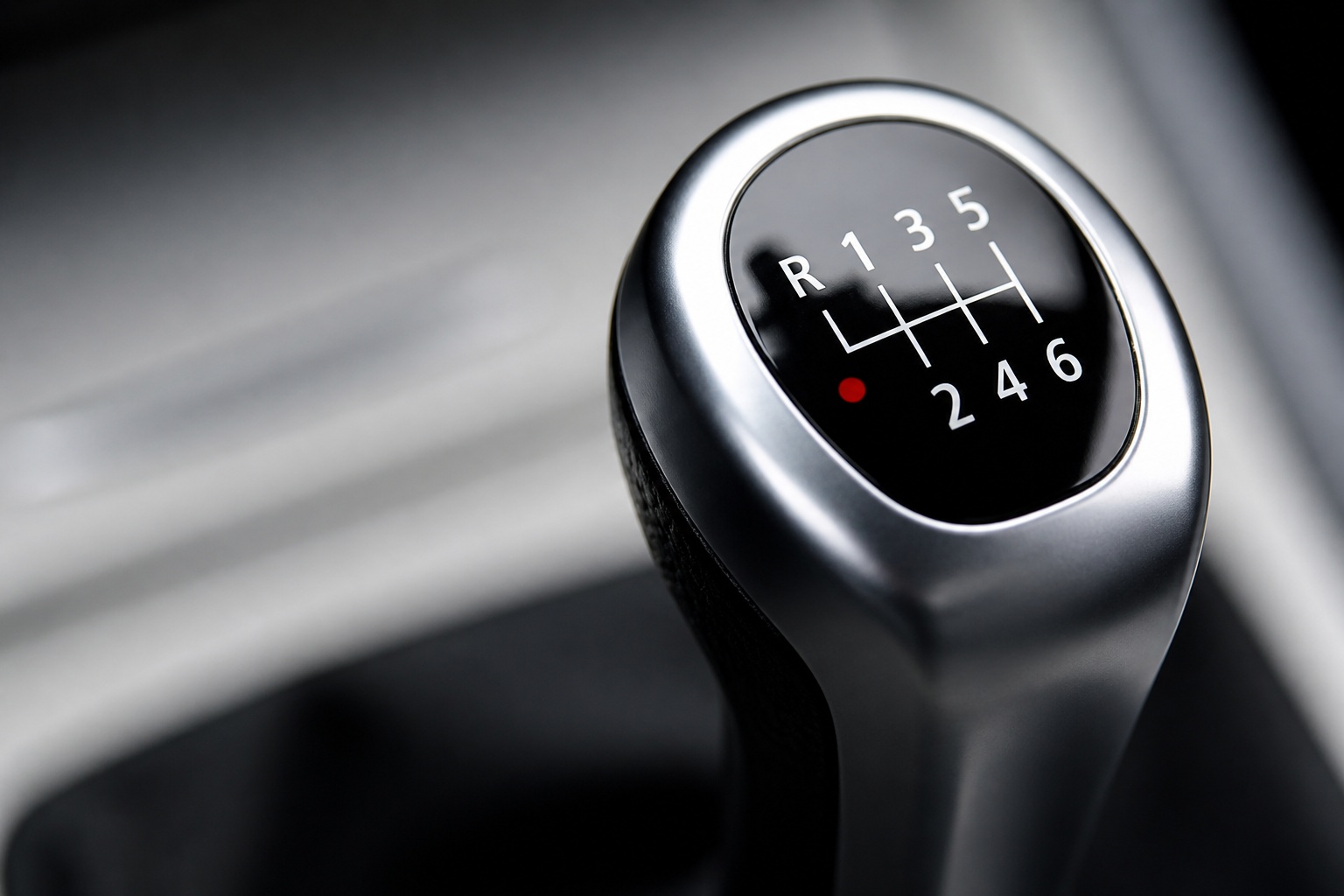
A skill that once defined the American driving experience is quietly disappearing. The ability to operate a manual transmission, long considered standard for licensed drivers in the United States, is now held by a shrinking minority. Recent survey data indicates that only about 18 percent of Americans today report knowing how to drive a manual vehicle, a steep decline from the widespread familiarity seen just a few decades ago.
Half a century ago, manual transmissions were not a specialty feature but a routine part of everyday driving. During the 1970s and into the early 1980s, a significant portion of vehicles on American roads required drivers to shift gears manually. For many households, there was no alternative. Learning to drive often meant mastering clutch control, gear timing, and coordination between hands and feet. Driver education programs commonly included manual vehicles, and the skill was passed down as a practical necessity rather than a choice.
The transition away from manuals did not happen overnight, but the shift has been decisive. By the 1990s, automatic transmissions had improved enough in reliability and fuel efficiency to become the preferred option for most drivers. Over the following decades, automakers steadily reduced the number of manual offerings. Today, manual transmissions account for less than 2 percent of new vehicle sales in the United States, and only a small percentage of new models are even available with a manual option.
That decline in availability has directly impacted driver knowledge. With fewer manual vehicles on the road, fewer drivers are exposed to them. Younger generations, in particular, are far less likely to encounter a manual transmission during driver training or in everyday life. While older drivers may still retain the skill from earlier experience, the overall percentage of Americans capable of driving manual continues to drop as the vehicle fleet evolves.
Industry data reinforces the trend. Manual vehicles now represent only a small fraction of registered cars nationwide, reflecting both consumer preference and manufacturing decisions. The rise of electric vehicles has further accelerated the shift, as electric drivetrains do not use traditional transmissions at all. At the same time, modern automatic transmissions have surpassed manuals in both performance and efficiency, eliminating many of the advantages that once justified learning the more complex system.
Urban driving conditions have also played a role. In congested traffic environments, automatic transmissions offer a level of convenience that manuals cannot match. As more Americans live and commute in densely populated areas, demand for ease of use has outweighed the need for mechanical control.
Despite the decline, manual transmissions have not disappeared entirely. They remain present in a limited segment of the market, particularly in performance-oriented vehicles where driver engagement is a selling point. However, their role has shifted from necessity to niche, appealing to a smaller group of enthusiasts rather than the general driving population.
No centralized federal database tracks how many Americans can drive a manual transmission, but the combination of survey data and vehicle sales figures presents a consistent and measurable trend. Compared to 50 years ago, when manual driving was a common expectation, the skill is now uncommon and continues to fade.
The evolution reflects broader changes in automotive technology, consumer behavior, and infrastructure. As manual transmissions become increasingly rare in the marketplace, the number of drivers who know how to operate them is expected to decline further, marking the end of an era that once defined what it meant to learn how to drive in America.