


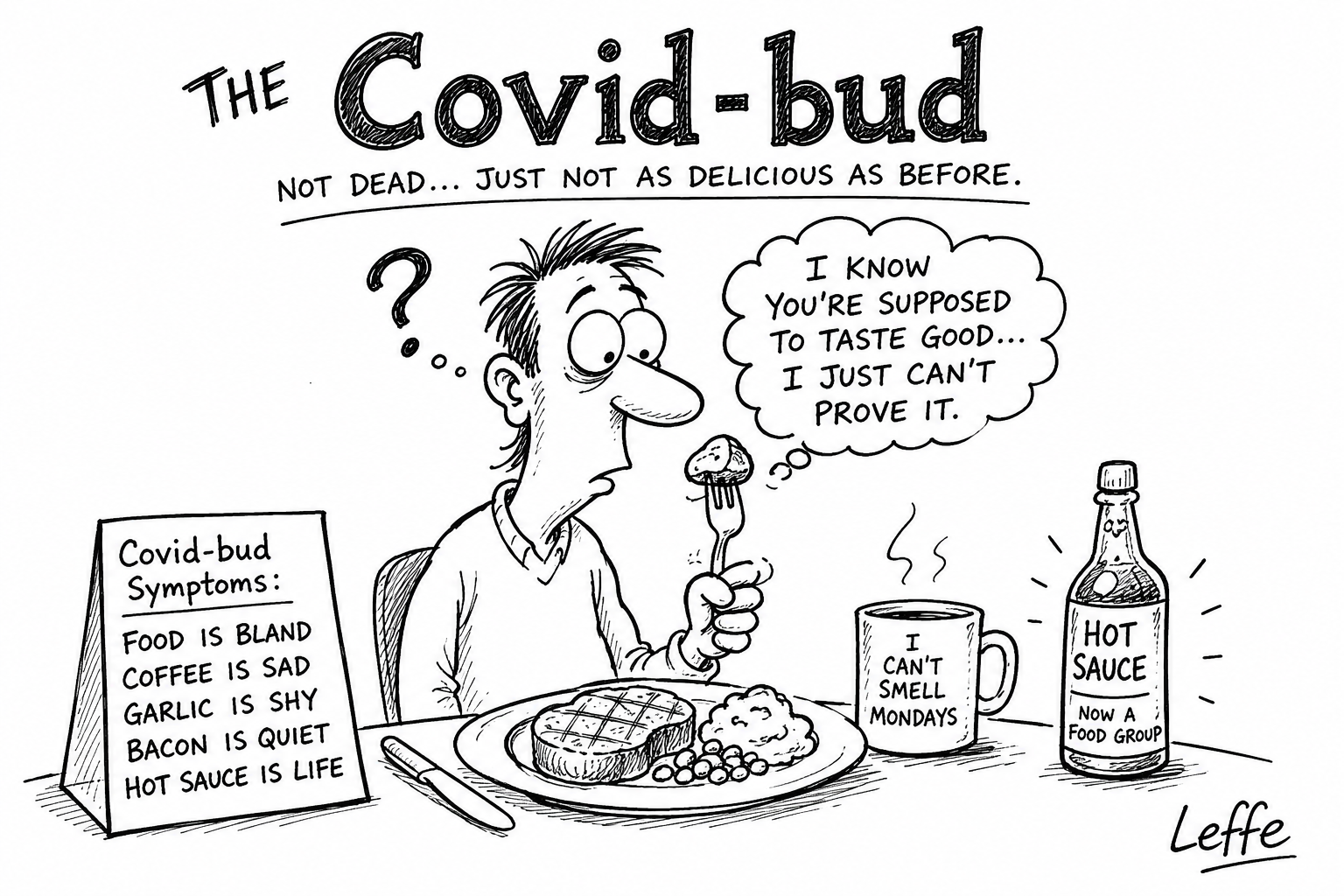
There are taste buds, and then there are Covid-buds. You know the difference when somebody hands you a beautiful plate of food, everyone around the table is raving about it, and you are wondering whether anyone remembered to put flavor in yours.
Welcome to the Covid-bud.
We are officially coining Covid-bud as the term for those once-reliable taste buds that went through COVID and apparently came back from the experience with a different job description. You can still taste food, but not like you used to. Some flavors are weaker, others seem different, and a few foods may taste like distant relatives of what you remember.
Coffee is still coffee, but perhaps without that glorious aroma that once dragged you out of bed. Chocolate is sweet but strangely unimpressive. Garlic can be sizzling three feet away without announcing itself. A cheeseburger looks perfect, feels right and tastes like somebody turned the flavor dial down to three.
You, my friend, may have a Covid-bud.
The Grants Pass Tribune is claiming the term immediately because somebody eventually will. Unauthorized use of Covid-bud may result in completely imaginary royalty demands and an intimidating letter from our equally imaginary intellectual-property department. Our attorneys have not reviewed this arrangement, primarily because we do not want them ruining a perfectly good joke.
The funny name, however, describes a very real phenomenon.
What we think of as taste is actually a partnership between the tongue, nose and brain. The tongue detects basic tastes such as sweet, salty, sour, bitter and umami. Your sense of smell supplies much of the additional information that creates recognizable flavor.
That is why losing or diminishing your sense of smell can make food seem nearly tasteless even when your tongue still works. Your mouth knows something is sweet. Your nose helps tell your brain that the sweetness is chocolate, strawberry, vanilla or something else entirely.
COVID-19 became well known for disrupting smell and taste. Some people recovered quickly, while others experienced changes lasting months or longer. Others found that familiar smells returned distorted, making foods and everyday odors seem completely different from what they remembered.
Medicine already has names for these conditions. Anosmia means loss of smell, while parosmia describes distorted smell. Ageusia refers to loss of taste, and dysgeusia describes altered taste.
Those are excellent medical terms.
We are still going with Covid-bud.
Living with a Covid-bud can also turn an otherwise reasonable person into a condiment fanatic. Suddenly the hot sauce is coming out at breakfast. Garlic gets doubled. Mustard becomes less of a condiment and more of emergency equipment. You find yourself adding jalapeños to things that have absolutely no historical relationship with jalapeños simply because your mouth would appreciate receiving some information.
Persistent changes in taste or smell should still be taken seriously. Smell contributes to appetite and enjoyment of food, but it also helps detect smoke, leaking gas and spoiled food. Significant or unexplained changes should be discussed with a healthcare professional because COVID is not the only possible cause.
For everyone else who knows exactly when their sensory world changed, we finally have a less clinical way to describe it.
If you had COVID and your favorite foods have never tasted quite the same, congratulations. Your taste buds have officially graduated to Covid-buds.
And should Covid-bud eventually become part of the American vocabulary, remember where you read it first.
Royalty checks can be made payable to the Grants Pass Tribune.