


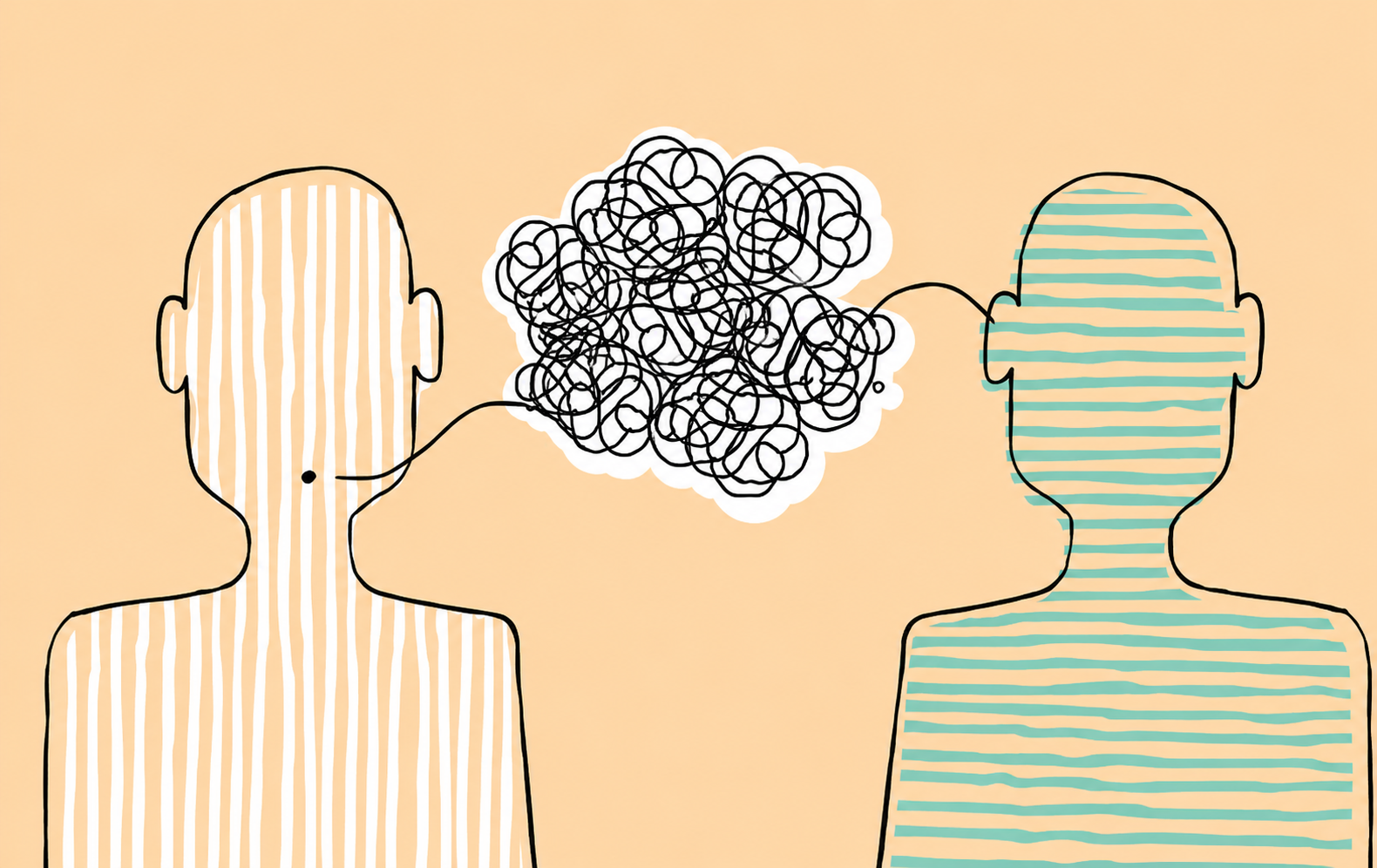
There was a time when disagreements ended with conversations. People sat across from one another, exchanged ideas, debated facts, and worked through differences. They did not always agree, but they understood that finding solutions required communication, accountability, and a willingness to listen.
Today, that foundation feels increasingly fragile if not extinct.
Across Josephine County, and throughout much of America, a different climate has emerged. It is a climate where facts are often treated as optional, where accountability is viewed as an inconvenience, and where personal responsibility is too frequently replaced by excuses, denial, or blame.
It is the climate.
The signs are everywhere. A disagreement becomes a public feud. A misunderstanding becomes an accusation. A difficult conversation becomes a social media battle. Rather than seeking answers, many seek validation. Rather than solving problems, many search for someone else to blame.
The result is a culture where emotion often outruns reason.
When confronted with challenges, some individuals no longer ask what role they may have played in creating the problem. Instead, they immediately position themselves as victims. Others refuse to acknowledge mistakes even when evidence is staring them in the face. The truth becomes secondary to preserving an image, protecting a reputation, or winning an argument.
That behavior is not limited to politics.
It appears in businesses, civic organizations, community groups, neighborhoods, and personal relationships. It can be found in public meetings and private conversations. It surfaces whenever people abandon honesty in favor of convenience.
The troubling reality is that ignorance rarely announces itself. It often disguises itself as certainty.
People become convinced they know the entire story after hearing only one side. They accept rumors as facts. They repeat allegations without verification. They form conclusions before gathering evidence. In doing so, they contribute to a growing culture where assumptions carry more weight than truth.
Communities suffer when this becomes normal.
Trust erodes. Relationships deteriorate. Reputations are damaged. Meaningful dialogue disappears. People retreat into circles where everyone agrees with them, reinforcing existing beliefs while shutting out differing perspectives. The ability to engage in thoughtful discussion becomes increasingly rare.
Josephine County is not immune to this phenomenon.
Despite being a community known for independence and strong opinions, there are growing signs of division fueled by misinformation, personal agendas, and a reluctance to confront uncomfortable realities. Too often, residents are encouraged to choose sides before they understand the facts. Too often, loyalty is valued more than honesty.
Meanwhile, those who ask difficult questions are frequently dismissed, criticized, or ignored.
Yet questions are not the problem.
Questions are how communities grow. Questions are how governments remain accountable. Questions are how businesses improve. Questions are how citizens separate fact from fiction.
The real problem emerges when people stop asking questions altogether.
A healthy community requires skepticism, curiosity, and personal responsibility. It requires citizens willing to challenge information regardless of where it originates. It requires individuals capable of admitting when they are wrong and leaders willing to accept responsibility when mistakes occur.
Most importantly, it requires courage.
Not the courage to shout louder than everyone else. Not the courage to attack opponents on social media. Not the courage to spread rumors behind closed doors.
The courage required today is far simpler.
It is the courage to seek the truth, even when the truth is inconvenient.
It is the courage to listen before judging.
It is the courage to think independently rather than follow the crowd.
Because if communities lose those qualities, they lose far more than a debate or a political argument. They lose the trust that holds neighbors together.
And when trust disappears, what remains is the climate we increasingly see around us; a climate of suspicion, division, denial, and endless conflict.
The question facing Josephine County is not whether that climate exists.
The question is whether enough people are willing to change it.