


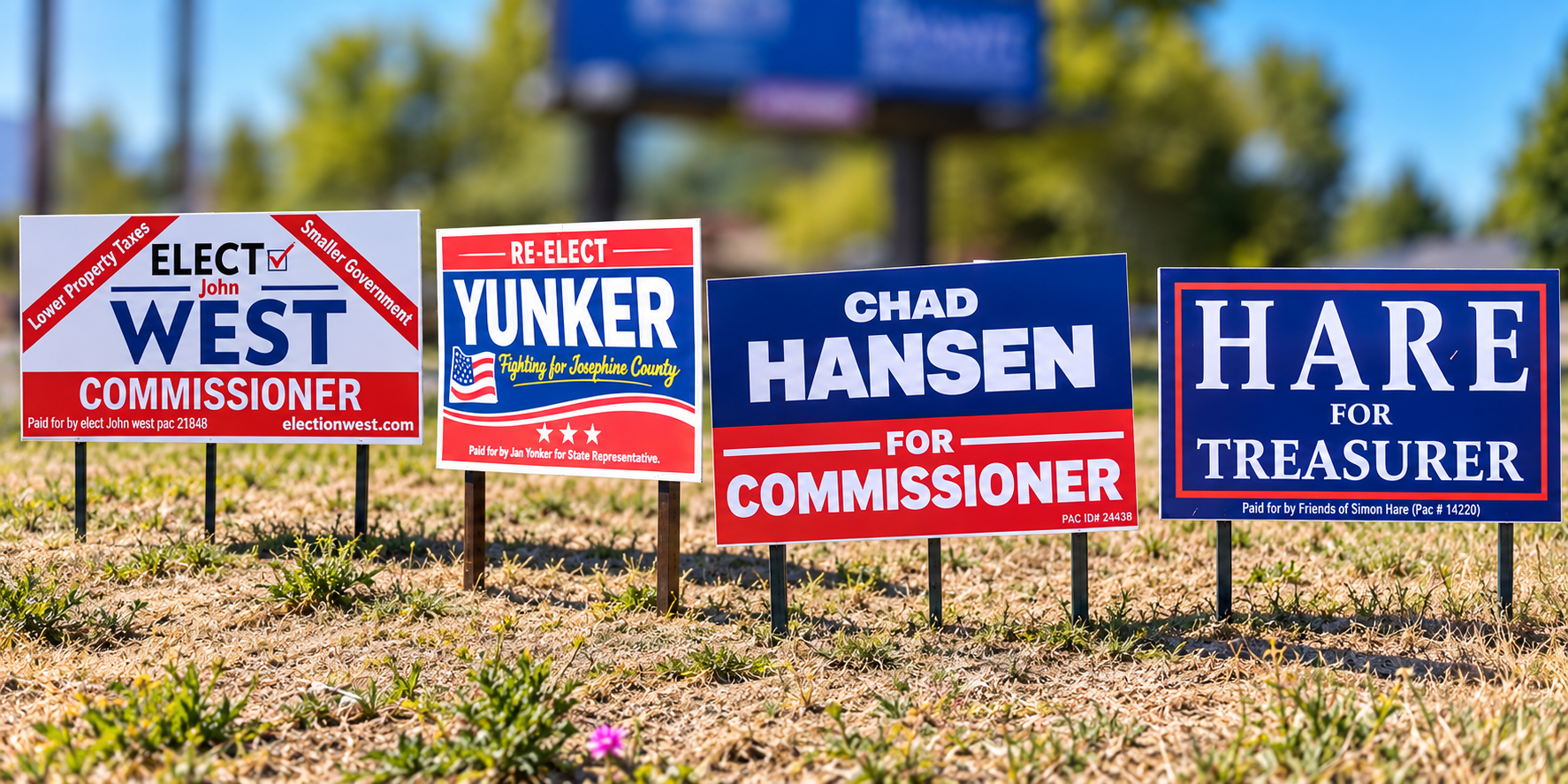
A campaign sign can tell you a candidate’s name. It cannot tell you whether that person is honest, competent or prepared to manage public money. It cannot explain a business relationship, address a potential conflict of interest or establish whether campaign promises survive examination. Yet when visibility becomes a substitute for accountability, an election can reward the person whose name appears most often while leaving the most consequential questions unanswered.
Josephine County voters should reject that bargain. Running for public office means asking the community to entrust someone with decisions that affect budgets, services, employees and the daily lives of residents. Anyone seeking that authority should expect questions that reach beyond a campaign slogan. Answering those questions is part of earning the office.
The pattern deserves a hard look: large signs, controlled appearances, familiar audiences and silence when the discussion becomes uncomfortable. A candidate may speak freely among supporters while declining questions from people who expect specifics. That approach gives voters a carefully managed introduction, but little opportunity to examine the judgment behind it. Repeating a message inside a sympathetic audience does not establish its accuracy.
Questions about business practices, financial interests, ethics and potential favoritism are legitimate when they bear on a candidate’s fitness for office. When someone describes their work as unpaid or voluntary, voters may reasonably ask what that means, which entities are involved and whether compensation or other benefits flow through related arrangements. When a candidate promises responsible management of taxpayer dollars, their record should be open to examination.
Those questions become particularly consequential when candidates own businesses that could benefit from decisions they would help make as county commissioners. The possibility of using public authority in ways that benefit private interests demands clear safeguards. Voters deserve to know how candidates will identify and disclose financial conflicts, and under what circumstances they will step aside from deliberations and votes. General assurances of honesty do not answer those questions.
Decisions involving businesses owned by friends or associates also deserve examination wherever financial ties or preferential treatment may be involved. When an official participates despite an apparent conflict, residents deserve an explanation of the interests at stake, the disclosures made and the basis for that participation. The public should not have to chase an explanation after money has been committed or a vote has been taken. Candidates should explain beforehand how they will handle these situations, including when they will recuse themselves and how the community can examine their decisions.
A candidate’s refusal to explain these relationships or describe how potential conflicts will be handled is a serious warning sign. Residents need confidence that county finances will be managed for the community’s benefit and that access to an elected official will not become a private business advantage. These explanations belong before the election, while voters still have a choice.
Silence leaves those questions unresolved. It does not correct an inaccurate statement, explain conflicting information or provide voters with a basis for confidence. A substantive response gives the public something to evaluate. Persistent avoidance gives the public a reason to examine the candidacy more closely. No campaign should expect residents to accept unanswered questions as the price of supporting its candidate.
Voters should also pay attention to how candidates respond when challenged. The ability to answer calmly and accurately matters. County government involves disagreement, competing demands and decisions that require explanation. A campaign offers an early opportunity to see whether a candidate can meet those responsibilities. Someone seeking authority over public business should be prepared to discuss that business beyond the comfort of a supportive audience.
Political loyalty should never excuse the absence of answers. A familiar name, an appealing slogan or agreement on one issue cannot settle questions about integrity and competence. The same standard should apply to every candidate, including the ones we like. Otherwise, accountability becomes something we demand from opponents and waive for friends.
Residents need to examine relevant records, compare promises with performance and recognize when a direct question repeatedly produces no direct response. Candidates should carry the burden of explaining why they deserve public trust. Voters should resist handing over that trust merely because a campaign has purchased enough visibility. An unanswered question about financial interests does not become less consequential because the candidate’s name appears on another roadside sign.
Josephine County cannot afford to treat elections as contests in name recognition. The people elected will exercise authority long after the signs come down. Their decisions will have consequences that campaign colors and slogans cannot soften. Before granting that authority, voters should insist on clear answers, verifiable claims and a record that can withstand examination.
Put up the signs. Make the case. Then answer the questions. Anyone asking Josephine County for its vote should be prepared to earn it in public.