


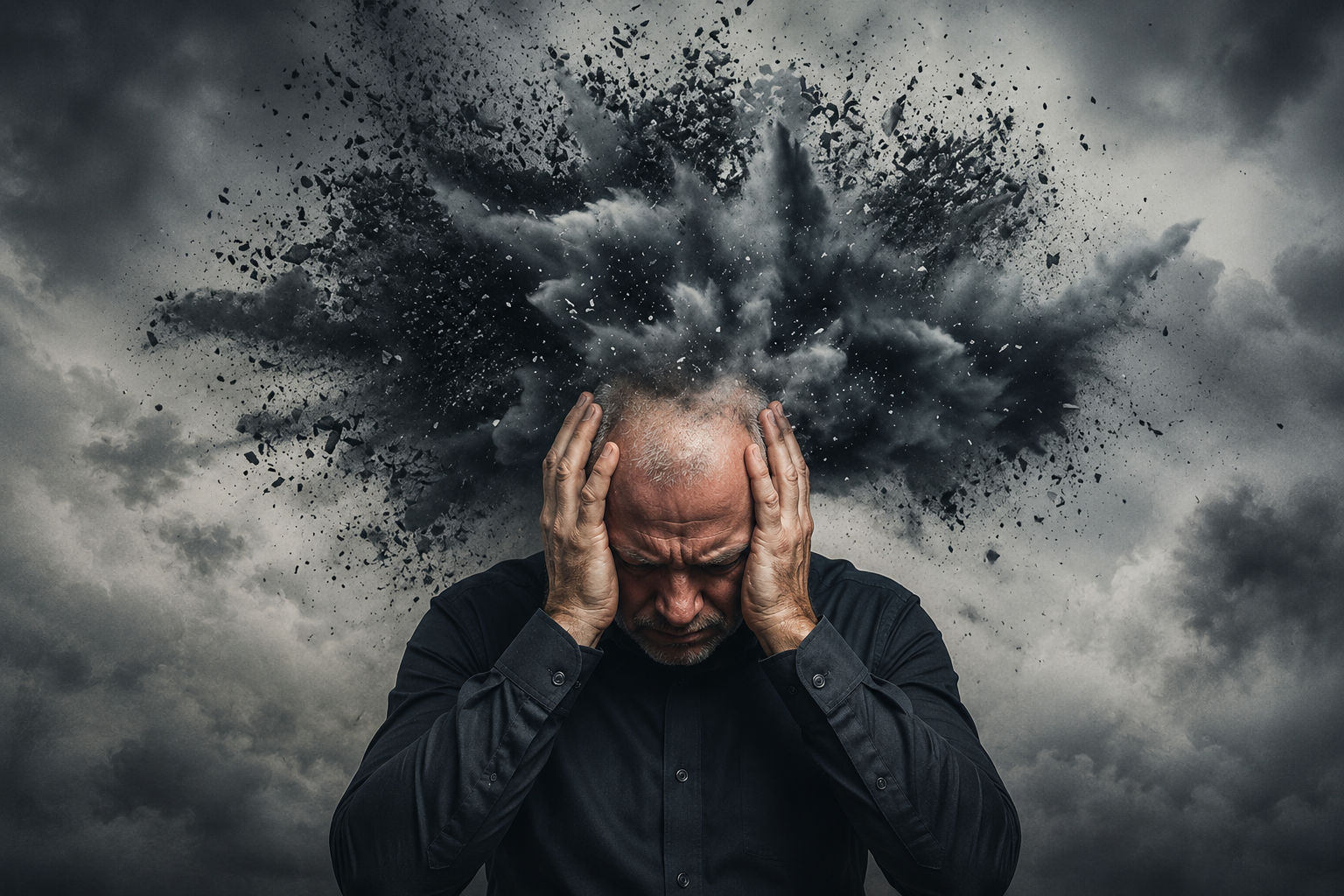
There are people walking through adulthood carrying wounds that never healed. Some hide those wounds well behind careers, families, routines, or carefully constructed personalities. Others do not. Their pain leaks into every interaction, every argument, every relationship, and sometimes even into the way they speak, react, or process the world around them.
Childhood trauma is not always visible. It does not always arrive with bruises or dramatic stories. Sometimes it appears decades later through anger, bullying behavior, emotional instability, control issues, paranoia, speech problems, social isolation, or a personality frozen somewhere between childhood fear and adult responsibility.
Psychologists and neurologists have long understood that severe trauma during childhood can permanently affect brain development, emotional regulation, communication skills, and interpersonal behavior. Children exposed to sexual abuse, physical violence, neglect, humiliation, addiction in the home, or chronic fear often grow up with nervous systems that remain locked in survival mode. For some, the damage becomes deeply embedded into adulthood.
That trauma can affect speech itself. Adults who experienced severe childhood trauma may develop stuttering, monotone speech patterns, verbal hesitation, difficulty organizing thoughts, or voices that seem emotionally trapped at a younger age. Some struggle with emotional maturity because key developmental stages were interrupted by fear, abuse, or psychological survival. In extreme cases, trauma survivors remain emotionally frozen in the age range where the abuse or neglect occurred.
The human brain is remarkably adaptive, but it is also protective. When a child experiences repeated trauma, the brain learns to prioritize survival over growth. Fear becomes the dominant operating system. Trust becomes difficult. Vulnerability feels dangerous. Emotional responses become exaggerated. Some children internalize the pain and become withdrawn. Others externalize it and become aggressive, manipulative, controlling, or verbally abusive.
That is often where the bully is born.
Not every bully experienced trauma, and not every trauma survivor becomes abusive. But many individuals who terrorize others are themselves carrying unresolved pain they never processed. The child who was powerless sometimes grows into an adult obsessed with control. The child who was humiliated may become the adult who humiliates others first. The child who never felt safe may lash out at anyone who challenges their fragile emotional structure.
Unfortunately, many people suffering from severe unresolved trauma do not recognize what happened to them psychologically. They simply know they are angry, reactive, defensive, emotionally disconnected, or unable to maintain healthy relationships. Some develop narcissistic tendencies or emotional volatility because admitting vulnerability feels unbearable. Others become emotionally stuck, unable to communicate beyond confrontation, denial, or blame.
People around them often feel confused. They may ask why someone behaves with such hostility, immaturity, cruelty, or emotional unpredictability. In some cases, even a person’s speech patterns, tone of voice, or diction can reflect years of suppressed emotional damage. Trauma affects the body as much as the mind. Chronic stress changes breathing patterns, muscle tension, vocal delivery, and neurological processing. A frightened child forced to survive psychologically may never fully develop the emotional confidence of a secure adult.
The difficult question becomes whether society should respond with compassion.
The answer is complicated.
Compassion matters because trauma is real, and many people did not choose what happened to them as children. Some survived horrifying circumstances no child should ever endure. Understanding that reality can help explain destructive behaviors that otherwise make little sense.
But compassion does not require surrendering boundaries.
Adults remain responsible for how they treat others, regardless of their trauma history. Pain can explain abusive behavior, but it does not excuse it. A person who weaponizes their trauma against everyone around them can still cause enormous emotional destruction. Some people seek therapy, accountability, healing, and self-awareness. Others refuse help entirely and remain trapped inside their own unresolved psychological prison.
Those are often the hardest individuals to reach.
When someone has spent decades building emotional defenses around trauma, meaningful communication becomes incredibly difficult. Every disagreement feels like an attack. Every criticism becomes betrayal. Every conversation circles back to anger, control, or emotional chaos. Some become so psychologically entrenched in survival thinking that healthy dialogue becomes nearly impossible.
That does not necessarily make them evil. It makes them wounded in ways they may never fully understand themselves.
For family members, coworkers, friends, or partners dealing with these individuals, the reality can be emotionally exhausting. Sometimes patience and understanding help. Sometimes professional intervention changes lives. Sometimes people eventually confront their past and begin healing.
And sometimes they never do.
That is one of the hardest truths about trauma. Not everyone escapes it. Some people remain emotionally trapped in the darkest chapters of their childhood long after becoming adults. Their minds continue replaying fear, shame, humiliation, or anger decades later, even if they cannot consciously identify why.
The healthiest response often becomes a balance between compassion and distance. Understanding where behavior comes from does not mean accepting abuse indefinitely. Some people can be helped. Others refuse help entirely. Recognizing the difference may be one of the most important emotional survival skills a person can learn.
Childhood trauma does not always disappear with age. Sometimes it grows silently beneath the surface until it shapes an entire personality. And in far too many cases, the child who was once hurt becomes the adult who hurts others because pain is the only language they ever truly learned.