


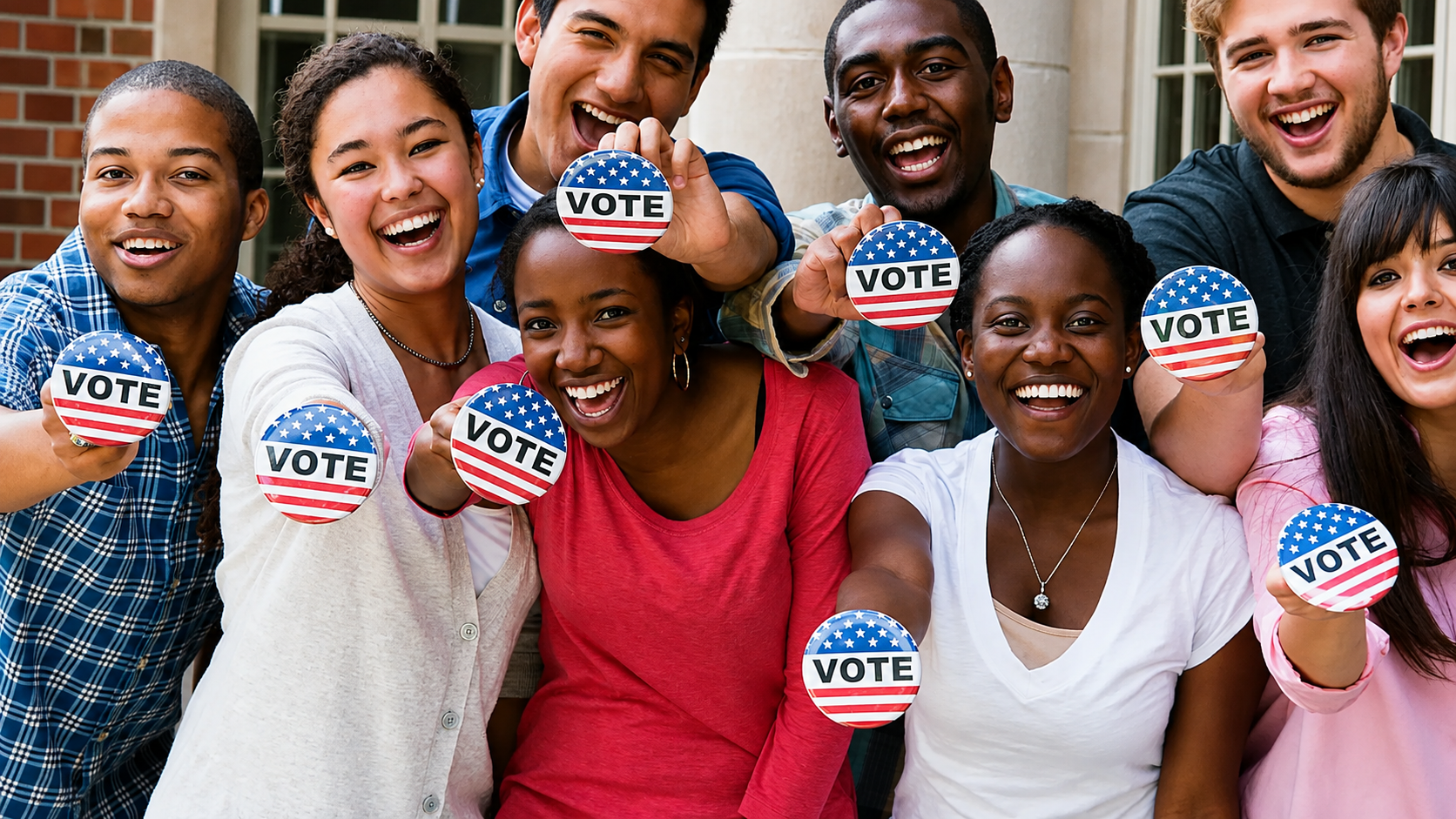
Oregon is expanding its efforts to bring college students into the electoral process with a new statewide initiative connecting colleges and universities around nonpartisan voter participation, civic education and long-term engagement in elections.
Secretary of State Tobias Read announced the Oregon Campus Voting Challenge as students prepare to return to campuses ahead of the 2026 general election. Twenty colleges and universities are participating at the program’s launch, creating a network that stretches from large public universities to community colleges and private institutions across the state.
The initiative is structured around a straightforward concern in election administration: young adults who are eligible to vote do not always participate at the same rate as other segments of the electorate. Rather than promoting candidates, political parties or particular outcomes, the challenge is intended to help participating institutions give students more opportunities to understand elections, become familiar with voting and develop habits of civic participation.
“Our elections decide our future, and no one has more at stake in that future than young Oregonians,” Read said. “However, too many young people don’t vote because they don’t feel connected to the process.”
Read said the program is designed to address that disconnect through an established model of campus civic engagement while maintaining a nonpartisan structure. Participating institutions are expected to make democratic participation a campus value, establish working groups involving students and administrators, examine data related to student engagement and develop plans intended to strengthen civic learning and voter participation.
The Oregon program is being conducted in collaboration with Civic Nation’s ALL IN Campus Democracy Challenge, a nationwide initiative working with colleges and universities on nonpartisan student democratic engagement. According to information included in the announcement, campuses highly engaged in ALL IN programming have recorded voter turnout rates approximately four to six percentage points higher than comparable institutions.
That measurement gives the Oregon challenge a defined benchmark beyond simply encouraging students to register or cast a ballot in a single election. Colleges are being asked to examine how students interact with the electoral process, identify areas where participation can be improved and establish programs capable of continuing beyond the November election.
The approach also places responsibility on participating institutions to build their programs around nonpartisan engagement. Campus working groups are expected to include both students and administrators, while action plans are intended to address civic learning, political engagement and voting without directing students toward a political party, candidate or ideology.
Chemeketa Community College President Jessica Howard described the effort as an extension of the broader educational role colleges can play in preparing students to participate in their communities.
“At Chemeketa, we believe education is about more than preparing students for successful careers,” Howard said. “It’s also about helping them find their voice, recognize that their opinion matters, and see themselves as active participants in the communities they call home.”
Howard said voting provides students with a direct opportunity to translate that civic connection into participation and described the challenge as a way to develop knowledge and habits that can continue after students leave college.
For Oregon, the initial group of 20 institutions gives the program a geographically broad starting point. Participating schools are Blue Mountain Community College, Chemeketa Community College, Clackamas Community College, Columbia Gorge Community College, Eastern Oregon University, Lane Community College, Lewis & Clark College, Linfield University, Linn-Benton Community College, Mt. Hood Community College, Oregon State University, Pacific University, Portland Community College, Portland State University, Reed College, Rogue Community College, Tillamook Bay Community College, the University of Oregon, the University of Portland and Western Oregon University.
The inclusion of Rogue Community College brings the initiative directly into Southern Oregon, while the overall roster encompasses institutions serving urban, suburban and rural communities. Community colleges account for a substantial portion of the inaugural participants, placing the challenge before students whose college experiences may differ considerably from those attending traditional four-year residential universities.
Participating Oregon institutions and individuals can also qualify for national recognition through the ALL IN Campus Democracy Challenge. Recognition may be awarded for areas including development of comprehensive action plans, student engagement and individual nonpartisan efforts aimed at increasing voter participation. Those awards are separate from election results and are tied to institutional civic-engagement work.
Jen Domagal-Goldman, executive director of the ALL IN Campus Democracy Challenge, said the organization is partnering with Oregon as students return for an academic year that coincides with the 2026 midterm election cycle.
“ALL IN commends Oregon’s commitment to nonpartisan civic engagement on college campuses, and we are proud to partner with Secretary of State Read to launch the Oregon Campus Voting Challenge to empower and support thousands of students to vote not only in November, but throughout their entire lives,” Domagal-Goldman said.
The program arrives at a point when thousands of young Oregonians will encounter an election while simultaneously beginning or continuing their higher education. Some will be voting for the first time, while others may be navigating registration, election information and ballot procedures while living away from their permanent addresses or balancing school with employment and family responsibilities.
The Oregon Campus Voting Challenge is designed to make those interactions with the election system part of a broader educational framework rather than treating voter participation as an activity confined to the weeks immediately before Election Day. Institutions will use campus organization, data and planning to determine how effectively they are reaching students and where additional civic resources may be useful.
Read said the objective extends beyond one election. “We are going to keep finding ways to get Oregonians involved in our elections because our state is stronger when more people make their voices heard.”
With 20 institutions participating at its debut, the challenge establishes a statewide framework that can be measured through student participation and campus engagement over time. Its first major test will come during the 2026 general election, when Oregon students across participating campuses will have the opportunity to put the program’s central purpose into practice by deciding for themselves whether, and how, to participate in the democratic process.