


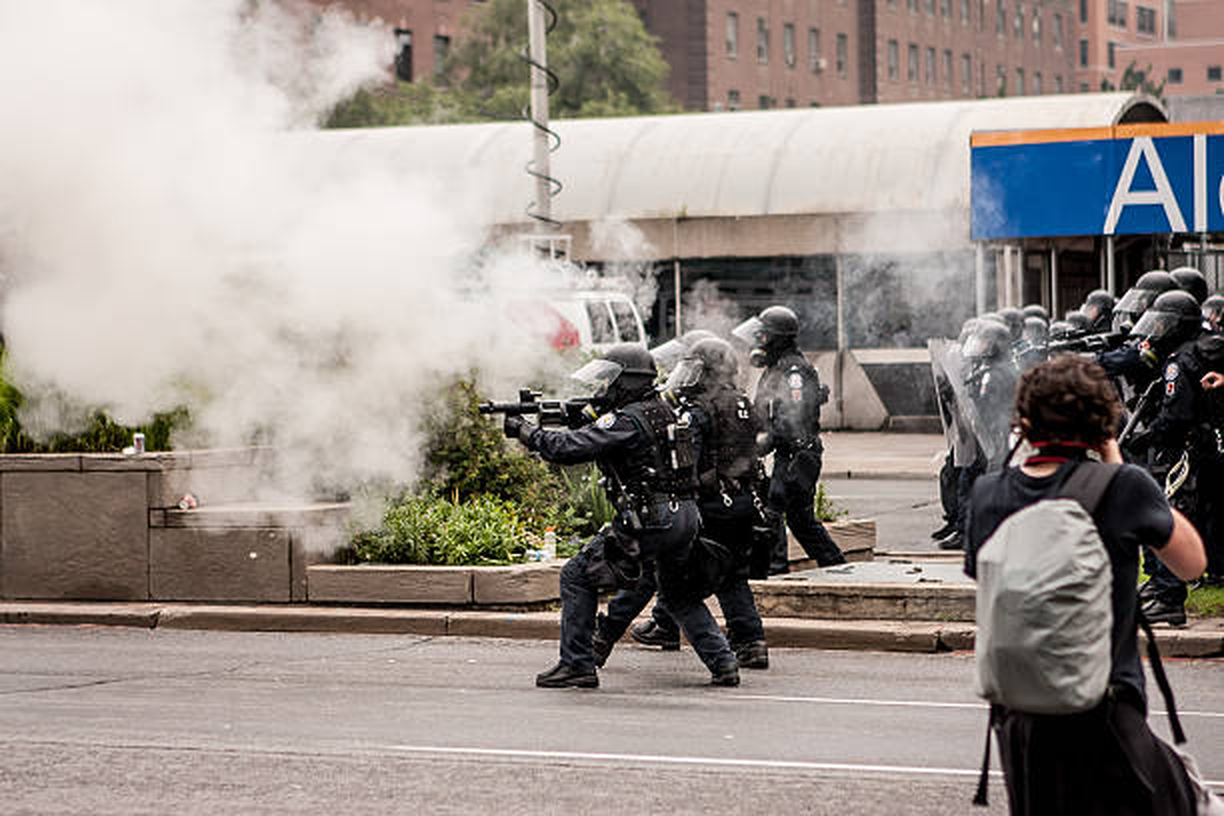
A protest outside Portland’s Immigration and Customs Enforcement facility that began as a demonstration over federal immigration policy has now resulted in a federal prison sentence and become one of Oregon’s most significant protest related criminal cases in recent years.
Robert Jacob Hoopes, 25, of Portland, was sentenced in federal court to 30 months in prison after pleading guilty to assaulting a federal officer during a June 2025 demonstration outside the ICE facility in South Portland. The case attracted attention across Oregon because it involved serious injuries to a federal officer and highlights the legal consequences that can arise when public demonstrations cross the line from protected speech into criminal conduct.
Federal prosecutors said the incident occurred during a gathering outside the immigration detention facility where protesters had assembled to voice opposition to federal immigration enforcement policies. During the demonstration, Hoopes threw a large rock that struck an ICE Enforcement and Removal Operations officer in the face.
According to court records, the impact caused substantial injuries, including severe facial trauma that required medical treatment. The officer suffered significant bleeding and vision impairment following the assault. Investigators later identified Hoopes through evidence gathered during the federal investigation and ultimately secured a guilty plea earlier this year.
The sentence imposed by U.S. District Judge Adrienne Nelson includes 30 months in federal prison, followed by three years of supervised release once Hoopes completes his incarceration. The court also ordered him to pay more than $8,000 in restitution associated with the incident.
While Portland has experienced years of demonstrations involving a wide range of political issues, including immigration, policing, racial justice, and federal government actions, relatively few cases have resulted in prison sentences of this length. That reality has placed additional focus on the Hoopes case among legal observers and law enforcement officials.
Federal authorities have repeatedly emphasized that the prosecution was not based on political beliefs or participation in a protest. Instead, prosecutors argued that the case centered on an act of violence that left a federal officer injured while performing official duties.
The case was prosecuted by the United States Attorney’s Office for the District of Oregon, part of the U.S. Department of Justice. Federal officials have maintained that individuals retain broad constitutional rights to protest government policies but lose those protections when demonstrations escalate into physical attacks.
The Portland ICE facility has been the site of recurring protests for years and remains one of the most visible locations for immigration related activism in the Pacific Northwest. Demonstrations there have at times drawn hundreds of participants, generating national attention and placing Portland at the center of ongoing debates surrounding immigration enforcement and federal authority.
The prosecution of Hoopes comes as federal agencies continue to pursue cases involving assaults on federal officers, destruction of government property, and other crimes linked to demonstrations across the country. Justice Department officials have increasingly sought prison sentences in cases involving serious injuries to law enforcement personnel, arguing that such penalties serve as a deterrent against future violence.
Although Oregon state agencies had no direct role in the federal prosecution, the case has become part of a broader statewide conversation about protest activity, public safety, and accountability. Supporters of robust protest rights point to the importance of protecting free expression, while law enforcement officials continue to stress that violence against officers is not protected under the Constitution.
Nearly a year after the rock was thrown outside the Portland ICE facility, the federal court proceedings have reached their conclusion. The sentence marks one of the most consequential criminal outcomes arising from Oregon protest activity in recent years and underscores the distinction federal courts continue to draw between peaceful protest and criminal violence.