


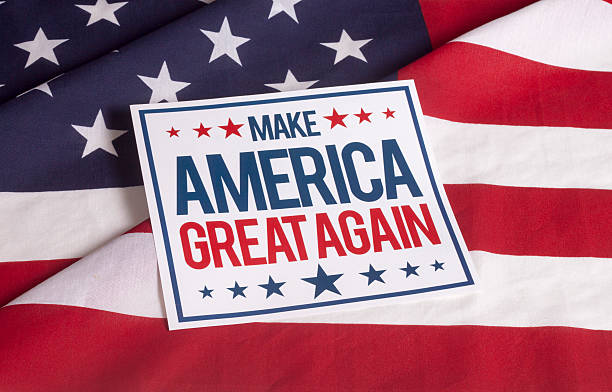
Few political slogans in American history have been as divisive—or as misunderstood—as “Make America Great Again.” What began as a campaign rallying cry for economic revival, national pride, and stronger borders has since morphed into a term loaded with controversy and assumption. For some, it still represents a call to restore American strength and values. For others, it has become shorthand for extremism, intolerance, and rigid ideology. But the truth is more complex. Millions of independent voters and traditional conservatives who once supported the message find themselves unfairly lumped into a narrative they don’t recognize and never signed up for.
The truth is that the vast majority of Republican voters, particularly those who supported conservative candidates in 2016 and beyond, did so not out of allegiance to a cult of personality, but out of concern for the direction of the nation. Economic decline, unchecked bureaucracy, global instability, and cultural confusion were—and still are—real issues. The desire to “make America great again” wasn’t a call for chaos or division. It was a cry for stability, prosperity, and a renewed sense of national pride.
For many Americans who have voted Republican, the phrase “MAGA” once resonated with a desire to revive American manufacturing, secure borders, preserve constitutional freedoms, and protect traditional values—none of which are inherently extreme. And yet, the phrase has since been co-opted by a fringe minority whose actions and rhetoric have done a disservice to the majority of conservatives who value civility, rule of law, and respectful discourse.
This misrepresentation has created a dangerous false equivalence: Republican equals MAGA, and MAGA equals radicalism. That oversimplification couldn’t be further from the truth.
The Republican Party has always been a broad tent. It has historically included fiscal conservatives, libertarians, national defense hawks, religious traditionalists, and moderate centrists. What binds most of these groups together is a belief in limited government, personal responsibility, free markets, and individual liberty—not authoritarianism or demagoguery.
But in the current media and cultural climate, nuance is too often discarded in favor of clickbait narratives and tribal loyalties. This dynamic has allowed a handful of performative extremists—those who shout loudest on cable news or stir outrage on social media—to define the brand for everyone else. They’re the ones storming capitol buildings, denying elections without evidence, or embracing conspiracy theories, while millions of ordinary conservatives watch in frustration as their values are distorted beyond recognition.
It is unfair, and frankly offensive, to paint every Republican with the same brush. Not every conservative wants chaos. Not every Republican supports obstructionism or thrives on outrage. In fact, many traditional Republicans and independents who lean right are calling for a return to core American values—order, diplomacy, reason, and patriotism untainted by extremism.
The misuse of the term “MAGA” has become a lazy shorthand for division, but it doesn’t reflect the whole truth. For many, it was never about idolizing one figure or rejecting democracy. It was about reclaiming an America where integrity mattered, where hard work was rewarded, and where the government worked for the people—not against them.
It is entirely possible to have voted for Donald Trump and still believe in the Constitution, still believe in truth, still reject lies and political violence. Just as it is possible to vote Republican without aligning with every policy or every personality that rises to power within the party.
Unfortunately, America’s current political culture rewards extremes. Moderates are often drowned out, independents overlooked, and centrists criticized by both ends of the spectrum. But the majority of Americans—left, right, and center—want many of the same things: peace, prosperity, freedom, fairness, and a functioning government that solves problems instead of creating more.
As an independent who once voted Republican out of a sincere desire to restore balance, morality, and common sense to national leadership, it is painful to see the narrative so twisted. It’s even more painful to be labeled as something you’re not, simply because of how you voted or which values you hold dear.
What’s needed now is a more honest national conversation—one that recognizes the diversity within political parties and makes space for thoughtful disagreement without descending into caricature. The future of American democracy depends on the ability to see one another not as enemies, but as citizens—each trying, in their own way, to contribute to a better country.
In the end, “making America great again” should never have been about slogans or sides. It should be about lifting each other up, healing divisions, and reclaiming what truly makes this country exceptional: liberty, opportunity, and the freedom to think—and vote—for ourselves.