


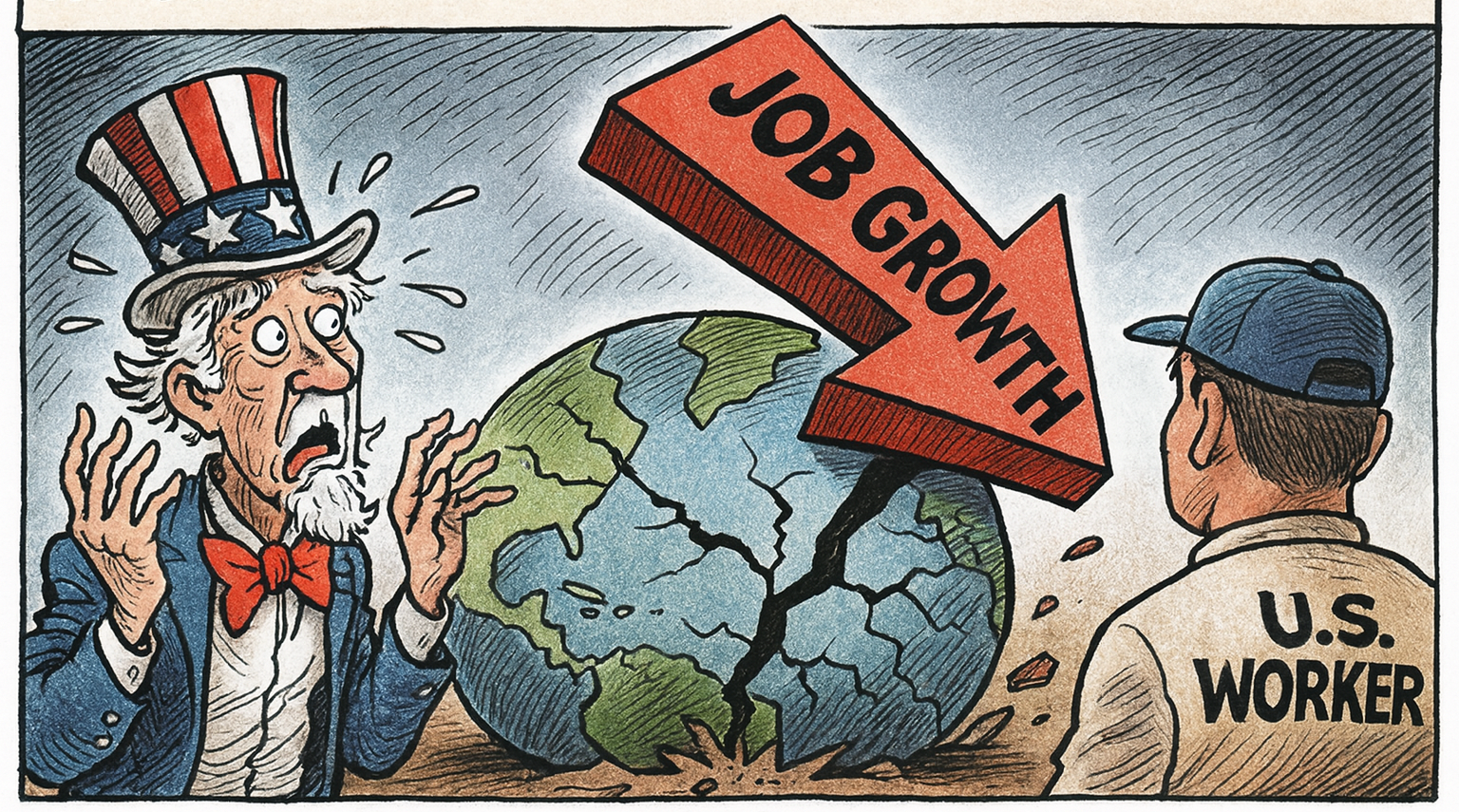
The U.S. labor market showed renewed signs of strain in November as the national unemployment rate climbed to 4.6 percent, the highest level recorded in more than four years. The increase has drawn attention from economists, policymakers, and workers alike, raising questions about whether the broader economy is losing momentum after a prolonged period of relative strength.
According to the latest federal employment data, the rise in unemployment occurred alongside modest job growth that fell well below historical norms. Employers added tens of thousands of jobs during the month, a figure that technically reflects continued expansion but also underscores a notable slowdown compared with the robust hiring pace seen in earlier years. This uneven combination of rising unemployment and weak job creation suggests the labor market is cooling rather than collapsing, yet the trend has become increasingly difficult to ignore.
Part of the November increase is linked to revisions from previous months, including a sharper than expected decline in October employment figures. Those revisions revealed job losses that were not fully apparent in earlier reports, contributing to a higher overall unemployment rate when combined with November’s subdued hiring. Analysts note that data collection challenges in recent months have further complicated interpretation, as disruptions within federal agencies have delayed reporting and reduced survey participation.
Beyond statistical issues, structural changes in hiring patterns are also playing a role. Businesses across multiple sectors have adopted a more cautious approach to expansion, delaying new hires while monitoring economic conditions. Manufacturing and transportation have continued to shed jobs, while growth in areas such as healthcare and services has slowed compared with prior years. Employers appear focused on maintaining current operations rather than expanding payrolls, a shift that often precedes broader economic softening.
The rise in unemployment is also influenced by changes in workforce participation. More Americans are actively seeking work, which can push the unemployment rate higher even when jobs are still being added. While increased participation can signal confidence among job seekers, it also means competition for available positions has intensified. For workers, this translates into longer job searches and reduced bargaining power, particularly in industries that are no longer experiencing labor shortages.
Wage growth has shown signs of cooling as well. After several years of steady increases driven by tight labor conditions, earnings growth has moderated, easing inflationary pressure but also limiting household income gains. For many families already strained by high housing costs, utilities, food prices, and insurance premiums, slower wage growth compounds financial stress and heightens sensitivity to even modest job market shifts.
The Federal Reserve is closely monitoring these developments as it weighs future monetary policy decisions. With inflation showing signs of easing but employment weakening, policymakers face a delicate balance. Recent interest rate reductions reflect concern that prolonged high borrowing costs could further dampen hiring and investment. A sustained rise in unemployment may increase pressure for additional policy action aimed at supporting economic activity without reigniting inflation.
Historically, an unemployment rate of 4.6 percent remains well below levels associated with major recessions. However, its significance lies in the direction of change rather than the absolute number. The steady upward movement from earlier lows marks a departure from the unusually tight labor market that defined much of the post pandemic recovery. Economists caution that while the economy is not currently in crisis, persistent increases could signal deeper weaknesses if job growth continues to lag.
For workers and businesses, the November figures reinforce a growing sense of uncertainty. Employers are reassessing long term plans, and employees are becoming more cautious about job security and spending. Whether the recent rise in unemployment represents a temporary adjustment or the early stages of a broader slowdown will depend on hiring trends in the coming months, consumer demand, and the effectiveness of policy responses.
As the labor market continues to evolve, the November report serves as a reminder that economic conditions can shift gradually before becoming widely felt. The coming data releases will be critical in determining whether the nation is experiencing a brief pause in growth or entering a more challenging phase for employment and economic stability.