


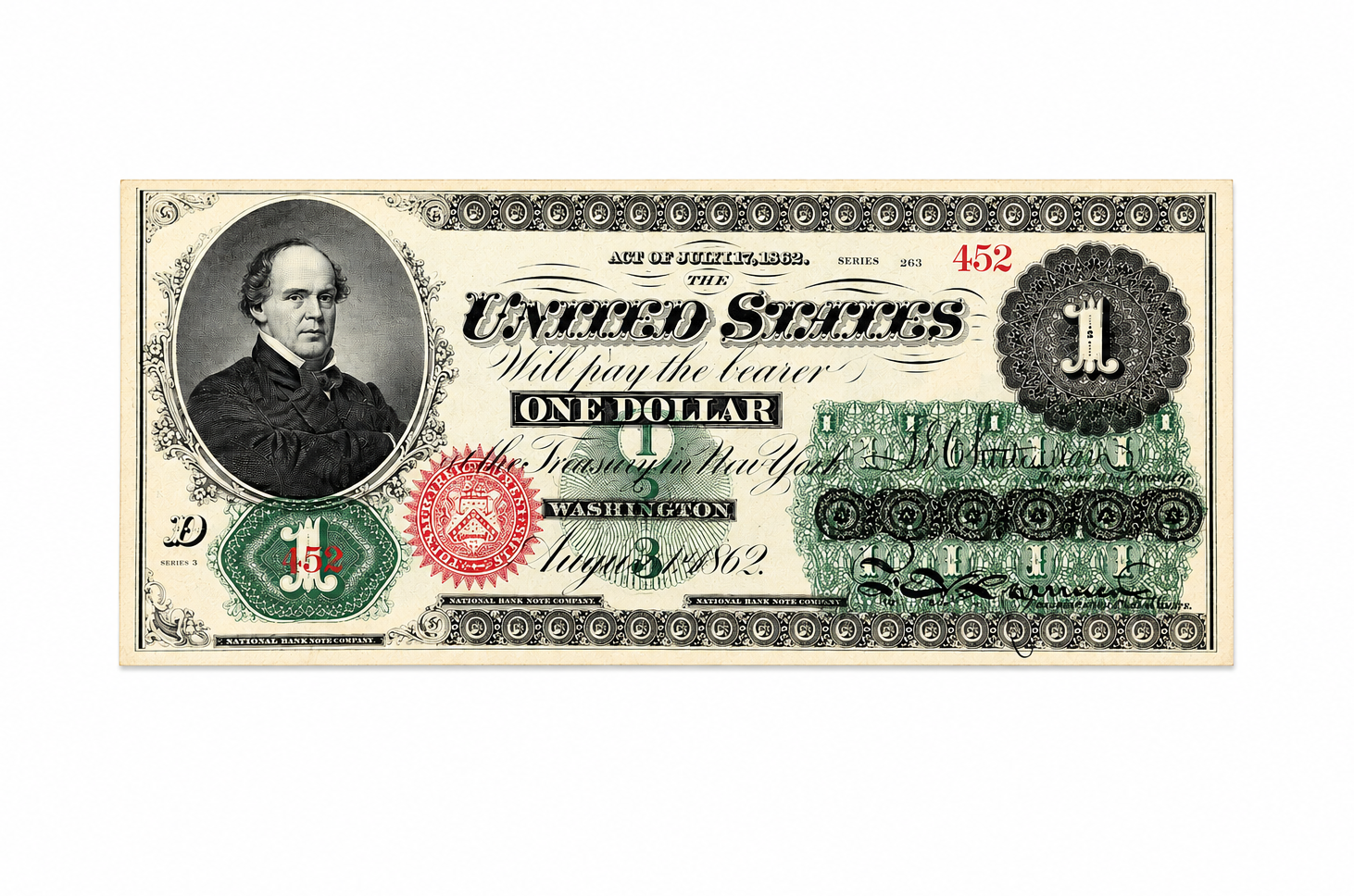
For generations, economists, politicians, bankers, investors and ordinary citizens have debated one of the most fundamental questions in modern society: what is money actually worth?
The answer appears simple. A dollar is a dollar. Ten dollars is ten one-dollar bills. A hundred dollars is a hundred one-dollar bills. The numbers do not change. The currency itself does not suddenly become larger, smaller or physically different from one year to the next.
Yet the purchasing power attached to that same dollar changes constantly.
A cup of coffee that once cost a quarter now costs several dollars. A family home that once sold for tens of thousands of dollars now often sells for hundreds of thousands or even millions. Groceries, fuel, insurance, healthcare, education and nearly every other necessity of life have climbed in price over the decades.
The dollar itself did not change. Society changed around it.
This contradiction sits at the center of one of the oldest economic debates in human history. If money is intended to serve as a stable measurement of value, why does the value measured by that money constantly move?
The modern explanation is inflation. Economists describe inflation as the gradual increase in prices across an economy over time. Central banks monitor it. Governments track it. Financial markets react to it. Entire industries are built around forecasting it.
Yet for many people outside academic economics, inflation often feels less like an economic principle and more like a symptom of a system that never solved its most basic problem.
Throughout history, civilizations have searched for reliable ways to measure value. Gold, silver, copper, grain and other commodities have all served as forms of money. The objective was simple: create a unit of exchange that people could trust tomorrow just as much as they trusted it today.
What followed was centuries of experimentation, monetary reform, currency debasement, financial crises and political intervention.
Modern economies eventually moved away from currencies backed directly by precious metals and toward fiat money, a system in which currency derives its value from government authority, economic productivity and public confidence rather than a fixed commodity.
That shift provided governments and central banks with greater flexibility during wars, recessions, financial panics and economic emergencies. It also created a reality in which the money supply can expand, contract and respond to changing economic conditions.
Some argue that such flexibility helps prevent deeper economic collapses. Critics argue that it creates conditions in which purchasing power can steadily erode over time.
The debate remains unresolved.
What makes the discussion particularly frustrating for many citizens is that inflation often feels detached from common sense. Most people understand that a gallon of milk remains a gallon of milk and a loaf of bread remains a loaf of bread. When prices rise dramatically while incomes struggle to keep pace, the explanation can feel unsatisfying.
Part of that frustration stems from the fact that inflation is not caused by a single factor. Government spending, monetary policy, supply shortages, labor costs, energy prices, global conflicts, transportation disruptions, consumer demand and market speculation can all influence prices simultaneously.
A drought can increase food costs. A war can raise fuel prices. A housing shortage can drive up rent. An expanding money supply can increase the amount of currency competing for the same goods and services.
The result is a system in which value is constantly being recalculated.
Those of modern monetary systems frequently point to a larger question. If inflation has been debated for centuries and its consequences are widely understood, why has no permanent solution emerged?
The answer may lie in the complexity of balancing stability and flexibility. A completely fixed monetary system could create its own problems during economic shocks, while a highly flexible system risks reducing long-term purchasing power. Policymakers, economists and financial institutions continue to wrestle with this tradeoff, often reaching different conclusions.
Meanwhile, the public experiences the practical consequences.
Families notice it at grocery stores. Retirees see it in the value of their savings. Workers feel it when wages fail to match rising costs. Businesses confront it through increasing expenses and uncertainty.
The conversation ultimately extends beyond economics and enters the realm of trust.
Money functions because people collectively agree that it has value. The paper itself is not inherently valuable. The digital numbers displayed in bank accounts possess no intrinsic worth. Their power comes from confidence, acceptance and belief in the system that supports them.
That reality can be unsettling. It means that money is not merely a financial instrument but also a social agreement.
The enduring question is whether society has created the best possible version of that agreement.
After centuries of monetary experimentation, recurring inflation, financial crises and economic restructuring, there remains no universal consensus. What does remain is a persistent observation shared by people across political, geographic and economic boundaries: the dollar itself may still be a dollar, but what that dollar can accomplish continues to change.
Whether that represents an unavoidable feature of modern economies or evidence of a problem humanity has yet to solve remains one of the most important economic questions of our time.