


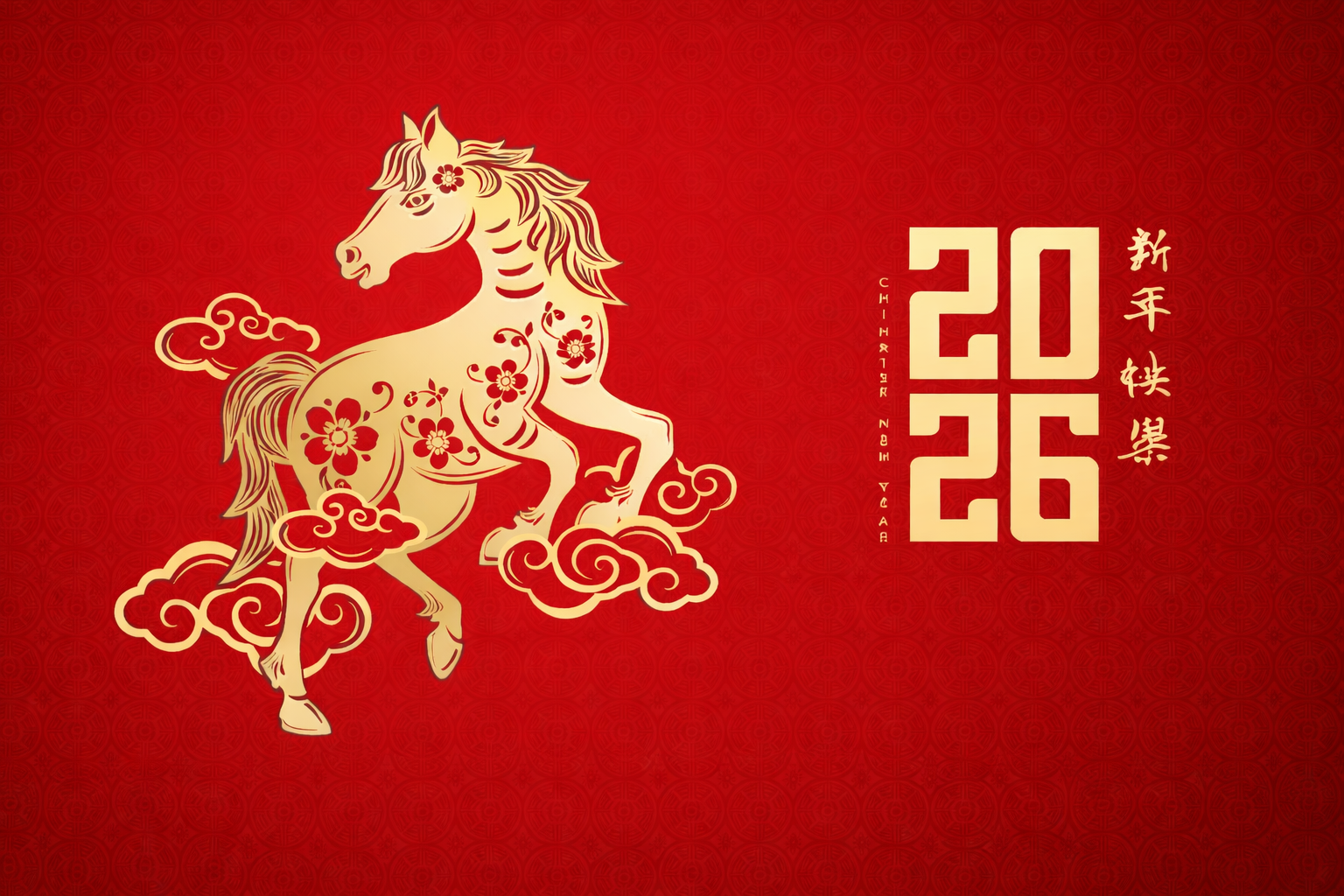
When the first new moon of the lunar calendar appears on February 17, 2026, more than a billion people around the world will mark the beginning of a new year. This time, the turning of the calendar carries unusual weight. The Year of the Fire Horse has arrived, a combination that appears only once every 60 years.
Lunar New Year, often called the Spring Festival, does not follow the fixed January 1 start recognized in the Western calendar. Instead, it begins with the first new moon between January 21 and February 20. In 2026, that moment falls squarely in mid February. The date signals not simply a celebration but the reset of a timekeeping system that has operated for centuries.
The Chinese zodiac is built on a 12 year cycle of animals, including Rat, Ox, Tiger, Rabbit, Dragon, Snake, Horse, Goat, Monkey, Rooster, Dog, and Pig. However, the zodiac is more complex than a simple animal rotation. Each year is also paired with one of five elements, Wood, Fire, Earth, Metal, or Water. These two systems run simultaneously, creating a 60 year cycle before the same animal and element align again.
The Horse returns every dozen years. The Fire Horse does not. The last time this pairing appeared was in 1966. For many families and cultural observers, that rarity alone makes 2026 noteworthy.
In traditional symbolism, the Horse represents movement, stamina, independence, and relentless forward drive. It is considered energetic and ambitious, often associated with individuals who resist confinement and prefer action over deliberation. Add the Fire element and those qualities intensify. Fire is linked to passion, visibility, boldness, and force. When combined, the Fire Horse is viewed as one of the most dynamic signs in the entire zodiac.
The reputation of the Fire Horse has not always been purely celebratory. In 1966, Japan recorded a significant decline in birth rates. At the time, lingering folklore suggested that girls born in a Fire Horse year would grow up strong willed and potentially difficult, a belief rooted in superstition rather than evidence. The demographic dip became one of the most cited modern examples of zodiac influence on social behavior. Today, such beliefs are far less common, yet the historical episode illustrates how deeply embedded the zodiac once was in everyday decision making.
In contemporary society, the zodiac functions more as cultural heritage than fate. It shapes decorations, marketing campaigns, horoscopes, and festive imagery rather than policy or planning. Still, each new lunar year sparks renewed interest in what the symbolism suggests. The Fire Horse’s return has already prompted discussion across Asian communities and beyond, not because it predicts outcomes, but because it carries historical weight and dramatic imagery.
Lunar New Year celebrations typically span 15 days and conclude with the Lantern Festival. Preparations often begin weeks in advance. Families clean their homes before New Year’s Eve to symbolically remove lingering misfortune from the previous cycle. Reunion dinners bring relatives together, sometimes after long journeys, for one of the most significant shared meals of the year. Cities across China and in international Chinatowns glow with red lanterns, banners, and illuminated displays as midnight approaches.
Fireworks remain a defining feature of the holiday. Traditionally, they were believed to frighten away negative forces at the start of the year. Today, they serve as both spectacle and tradition, marking the transition with sound and light. Lion and dragon dances weave through crowded streets, accompanied by drums that echo late into the night.
The Year of the Fire Horse will continue until early February 2027, when the lunar calendar advances again. Over the next twelve months, the symbol of the horse will appear on calendars, artwork, clothing, and commemorative merchandise. It will also appear in countless horoscope columns, each offering interpretations of what a Fire infused year might represent.
Whether viewed as folklore, family tradition, or cultural pageantry, the arrival of the Fire Horse stands out within the broader zodiac cycle. It is a reminder that while most of the world measures time in weeks and quarters, another system quietly tracks decades in repeating elemental patterns. On February 17, 2026, that system turns to one of its most forceful combinations, a pairing remembered not for subtlety but for intensity.
For those who observe it, the Fire Horse does not merely mark another year. It marks the return of a rare moment in a sixty-year rhythm, a chapter that will not reappear until 2086.