


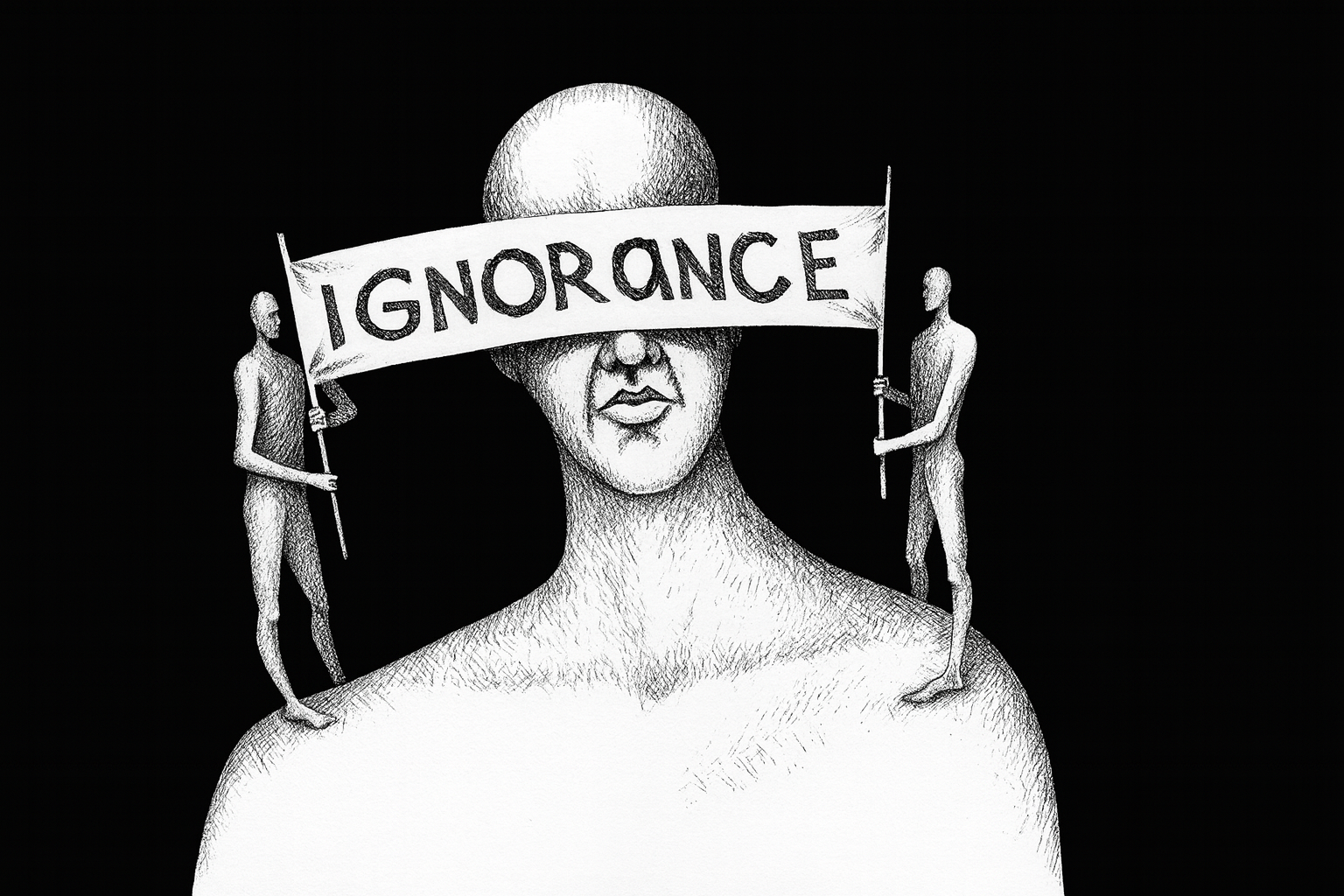
In Josephine County, political discourse has once again revealed a troubling undercurrent of ignorance—one that blurs the line between supporting a cause and being directly involved in it. This is nowhere more evident than in the ongoing recall effort targeting County Commissioners Chris Barnett and Andreas Blech, where accusations have begun to fly toward anyone who so much as signs a petition or voices agreement with the recall’s goals.
It seems many local political figures and their supporters either cannot or will not grasp a basic civic distinction: signing or supporting a recall does not make a person a member, donor, or operative of the recall committee. It simply means that individual—a free citizen—has decided they no longer want the current officials in office. That’s it. Nothing more, nothing less.
Yet, this nuance has been lost in the fog of political rhetoric. Some commissioners and their allies have equated public statements of support for the recall effort with direct organizational involvement. In their eyes, signing a petition automatically transforms a citizen into a “bad actor,” a “volunteer,” or even a “financial backer” of the campaign. This kind of thinking is not only inaccurate, it is dangerous for a functioning democracy.
The logic they use is as flawed as saying that because someone is registered as a Republican, they must support Donald Trump—a statement that is obviously false to anyone with an ounce of common sense. Political identity and individual political choices are not the same thing. A person can be Republican and vehemently opposed to Trump; they can be nonpartisan and sign a recall; they can agree with a political idea without belonging to the group advancing it.
This failure to differentiate between ideological support and organizational involvement reflects a broader lack of understanding—one that seems to fester in certain corners of Josephine County’s political landscape. Instead of recognizing the complexity of civic engagement, these leaders have resorted to labeling and suspicion. Their misunderstanding quickly becomes misinformation, which then spreads to their base and supporters, amplifying division and hostility in the community.
It’s important to remind ourselves what a recall is: a legal, constitutionally protected mechanism by which voters can hold elected officials accountable before their term ends. It is a tool of the people, not a weapon wielded only by political elites or organized committees. When a citizen signs a recall petition, they are exercising their right to participate in that process—not joining a club, funding a cause, or taking up arms against their neighbors.
And yet, in recent weeks, this simple act has been recast as something sinister. Individuals who have signed the petition or publicly agreed with the recall effort have been accused of being “defensive,” “involved,” or “declared enemies.” This is political ignorance at its most corrosive: using misunderstanding as a cudgel to discredit others.
Such behavior reflects poorly not just on those making the accusations but on the broader civic environment they help shape. Leadership should be about informing, clarifying, and guiding—not confusing the public for political advantage. When commissioners and their supporters choose to conflate support with involvement, they erode trust in the democratic process and alienate community members who simply wish to express their opinions.
The irony is that the truth is simple. Signing a petition is a statement of personal belief, not a membership application. Supporting a cause publicly does not mean you wrote the press releases, knocked on doors, or donated money. It means you have an opinion—and in a healthy democracy, that’s allowed.
Until Josephine County’s leadership and their most fervent supporters educate themselves on these basic distinctions, their accusations will continue to be rooted in ignorance. And as long as that ignorance persists, the local political landscape will remain clouded by misinformation, suspicion, and misplaced blame.