


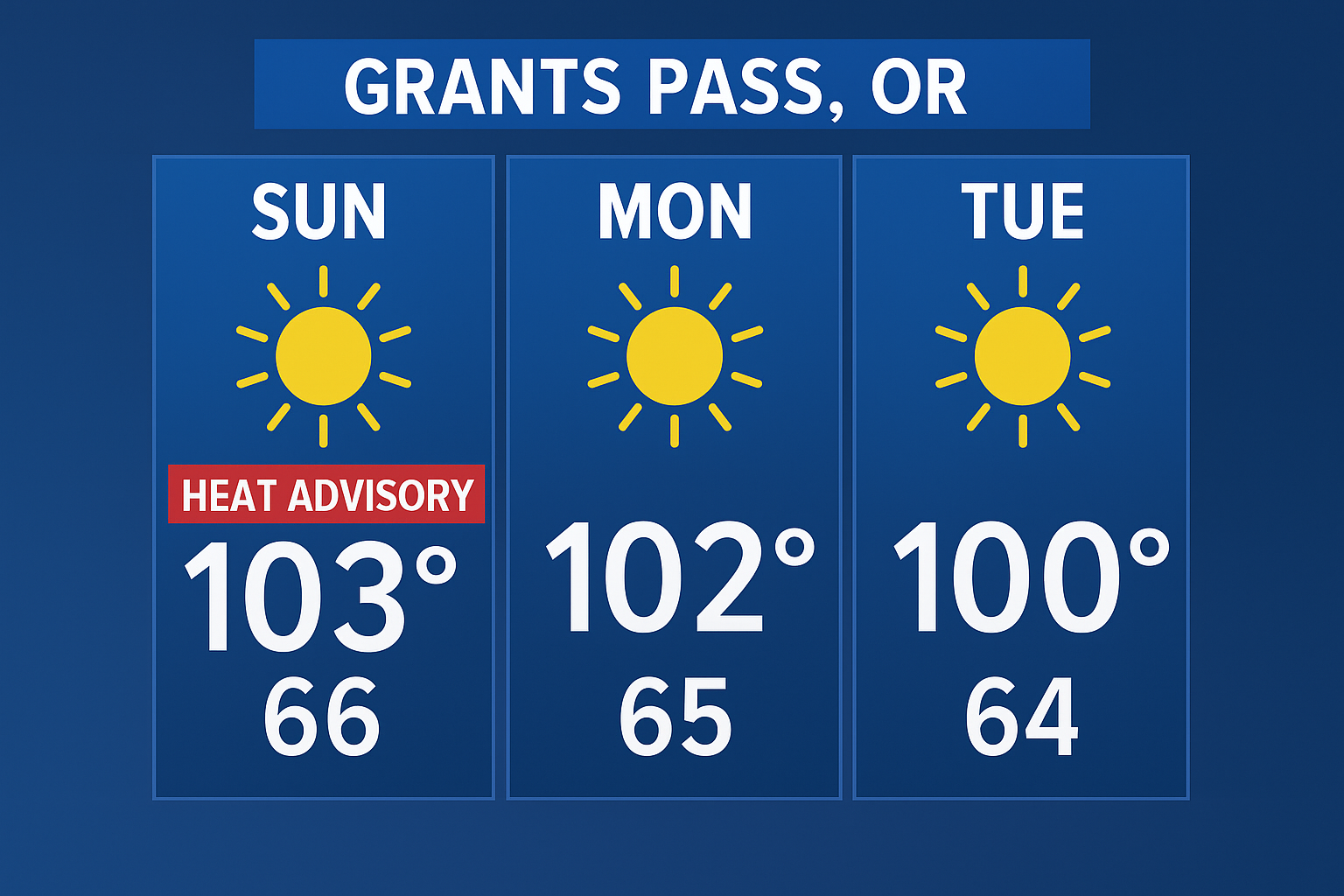
Grants Pass is heading into another scorcher, with temperatures forecast to climb into the triple digits this Sunday. While Southern Oregon residents are no strangers to summer heat, the extreme temperatures expected over the next few days require extra attention to health, safety, and simple prevention measures.
Those with meteorology degrees are predicting highs well above 100 degrees, with limited evening relief. Prolonged exposure to such conditions can increase the risk of heat-related illnesses, including heat exhaustion and heat stroke. Health experts stress that the best defense is preparation—staying hydrated, keeping cool, and avoiding unnecessary exposure during peak heat hours, generally from late morning through early evening.
Hydration is a key factor in maintaining safety during a heat wave. Water should be the primary beverage of choice, as caffeine and alcohol can contribute to dehydration. Even if you don’t feel thirsty, your body still loses fluids through sweat, so sipping water throughout the day is essential. Electrolyte-replenishing drinks can also be helpful for those spending time outdoors, but they should supplement—not replace—water intake.
In addition to hydration, limiting direct sun exposure is important. Indoor activities are the safest option during the hottest parts of the day. If you have access to air conditioning, use it. For those without, public cooling centers, libraries, or shaded outdoor spaces can provide relief. This weekend could be the perfect opportunity to stay inside, play a board game like Scrabble or Uno, or work on an indoor hobby rather than taking on strenuous outdoor projects.
Heat waves also pose particular risks to vulnerable populations. Infants, young children, older adults, and those with chronic health conditions may be more susceptible to heat-related illnesses. If you have elderly neighbors, friends, or relatives living alone, make it a point to check in on them to ensure they are safe and have access to a cool environment.
One safety reminder cannot be repeated enough: never leave children or pets in a parked car, not even for a minute. Temperatures inside a vehicle can rise rapidly, exceeding 120 degrees in a matter of minutes—even with windows partially open. These conditions can be fatal, and every summer sees preventable tragedies linked to unattended vehicles.
Pet owners should also take precautions by keeping animals indoors during extreme heat, ensuring they have fresh water, and avoiding hot pavement that can burn paw pads. Short walks during cooler morning or evening hours are far safer.
For those who must be outdoors, whether for work or errands, light-colored, loose-fitting clothing can help keep body temperature down. Wearing a hat and applying sunscreen will also reduce the effects of direct sunlight. Frequent breaks in the shade and regular hydration can go a long way toward preventing overheating.
This weekend’s forecast is a reminder that triple-digit heat demands respect. A little planning—hydrating early, staying indoors when possible, and checking on neighbors—can make all the difference. The summer sun may be relentless, but with a cautious approach, the community can enjoy the season while staying safe.