


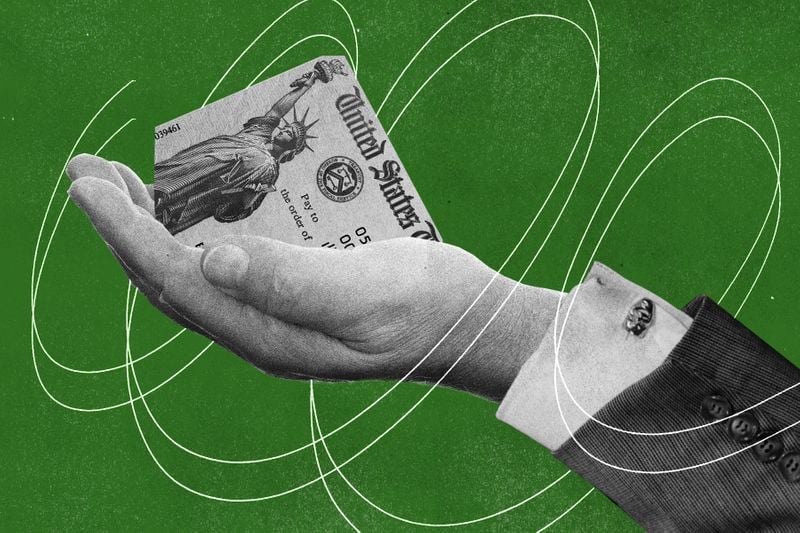
President Donald Trump has introduced a new economic concept that has caused debate across financial and political circles, proposing a $2,000 tariff rebate payment aimed at American taxpayers earning under $100,000 annually. The idea centers on returning a portion of federal revenue generated from tariffs directly to households, framing the policy as a way to offset higher consumer costs while rewarding working- and middle-class Americans.
The proposal, still in its conceptual stage, would rely on revenue collected through tariffs imposed on imported goods. Tariffs are paid by importers and often passed along to consumers in the form of higher prices. The Trump administration argues that these tariffs strengthen domestic manufacturing, protect U.S. industries, and generate significant government revenue. The proposed rebate would, in theory, redistribute some of that revenue back to taxpayers most affected by rising costs.
Under the concept outlined so far, eligibility would be limited to individuals and households earning less than $100,000 per year, effectively excluding higher income earners. Supporters of the idea describe it as a targeted financial relief measure that avoids adding benefits for wealthier taxpayers while focusing on households more vulnerable to inflation and cost pressures. The payment has been characterized as a one time rebate rather than an ongoing entitlement, though no final structure has been defined.
Despite the attention the proposal has received, it remains far from implementation. No legislation authorizing such payments has been introduced or passed, and no formal mechanism has been announced for distributing funds. Any rebate program would require congressional approval, coordination with the Treasury Department, and likely involvement from the Internal Revenue Service. As of now, there is no confirmed timeline, payment schedule, or guarantee that the proposal will advance beyond discussion.
Economists and fiscal analysts remain divided on the feasibility of the plan. Some note that while tariffs do generate billions in revenue, the total amount collected may not be sufficient to fund $2,000 payments for tens of millions of eligible taxpayers without reallocating funds from other priorities or increasing federal borrowing. Others emphasize that tariffs function as an indirect tax on consumers, meaning that the rebate could be viewed as returning money already paid through higher prices rather than delivering new economic stimulus.
The proposal also raises broader questions about the role of tariffs in economic policy. Critics argue that tariffs can contribute to inflationary pressures, strain trade relationships, and disrupt supply chains. Supporters counter that tariffs provide leverage in trade negotiations and help reduce dependence on foreign manufacturing. The rebate concept appears designed to soften public resistance to tariffs by linking them to a tangible benefit for taxpayers.
Politically, the idea reflects a broader effort to position economic policy around direct financial relief while maintaining a tough stance on trade. Whether the tariff rebate gains traction will depend on congressional response, fiscal analysis, and public support. For now, the proposal remains an untested idea that highlights ongoing debates over trade policy, inflation, and the federal government’s role in redistributing revenue during uncertain economic times.