


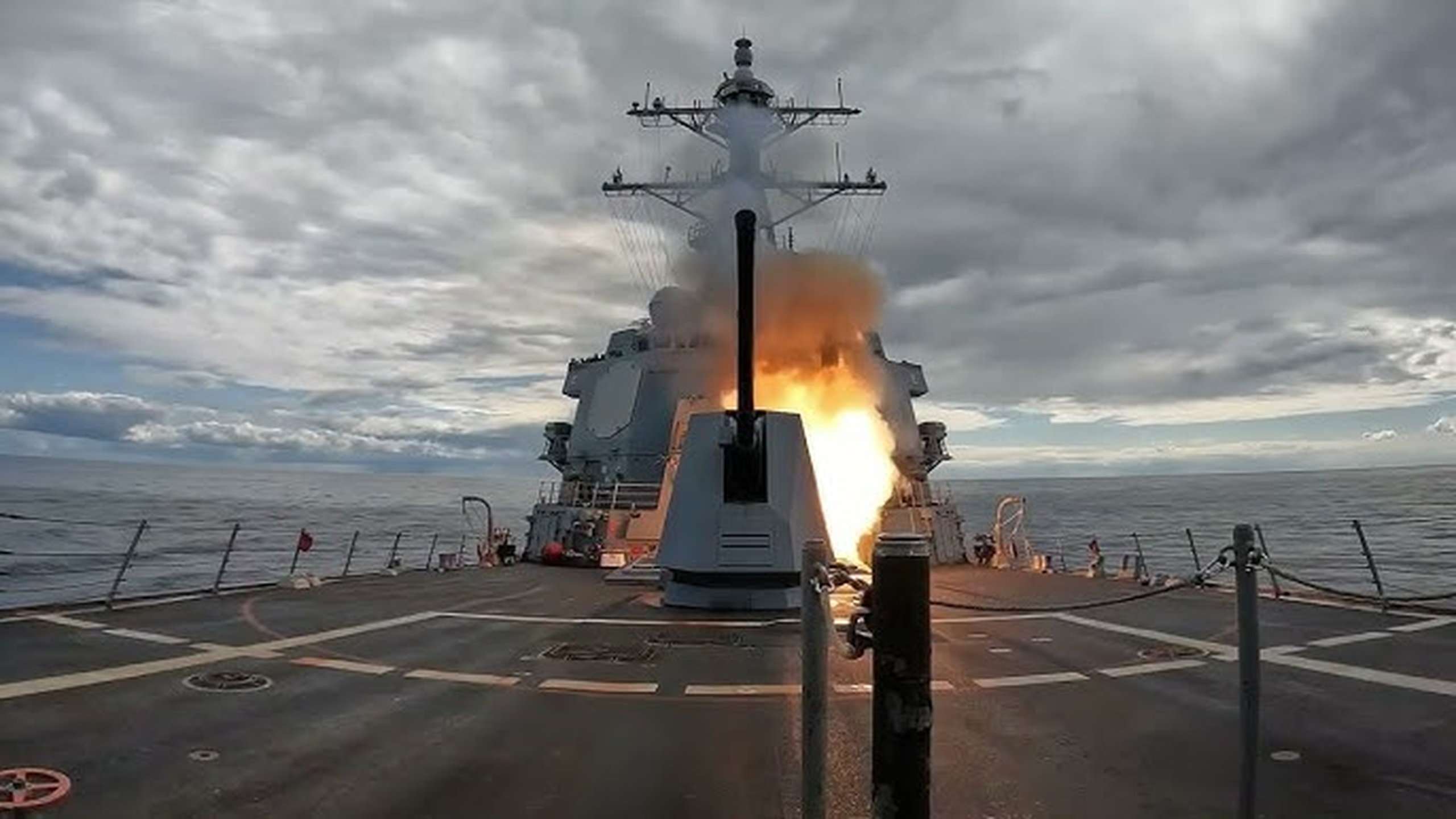
The United States launched new military strikes inside Iran this weekend, escalating an already volatile confrontation in the Persian Gulf and placing renewed pressure on a fragile ceasefire framework meant to prevent the conflict from widening across the region.
The latest U.S. action followed what American officials described as continued Iranian aggression against commercial shipping in the Strait of Hormuz, one of the world’s most important maritime corridors. U.S. Central Command said American forces struck Iranian military targets after Iran was accused of attacking another commercial vessel despite prior warnings and ceasefire understandings.
The strikes marked a significant turn in the conflict, shifting the United States from deterrence and warning to direct military action aimed at degrading Iran’s ability to threaten shipping lanes. Military targets identified by U.S. officials included surveillance infrastructure, coastal radar systems, drone facilities, air-defense assets, communications equipment and other military sites connected to Iran’s operations near the strait.
The White House framed the strikes as a defensive response intended to protect international navigation and prevent Iran from using the Strait of Hormuz as leverage against the United States, its allies and the global economy. The administration’s position is that Iran violated the ceasefire arrangement by continuing attacks on commercial vessels, creating an immediate threat to shipping crews, energy markets and regional stability.
The Strait of Hormuz remains central to the crisis. A large share of global oil traffic moves through the narrow waterway between Iran and Oman, making any military disruption there a matter of international concern. Even limited attacks on tankers or cargo ships can drive up security costs, slow maritime traffic and raise fears of broader energy instability.
Iran has denied portions of the U.S. account and has accused Washington of violating the ceasefire through military escalation. Iranian officials have portrayed their actions as defensive and retaliatory, while U.S. officials maintain that Iran’s attacks on shipping triggered the latest response.
The renewed confrontation is also creating political pressure in Washington. The administration now faces the challenge of showing strength without allowing the conflict to spiral into a larger war. Members of Congress are expected to scrutinize the scope of U.S. military action, the legal authority for continued strikes and the administration’s long-term strategy if Iran continues to test American resolve.
For the Pentagon, the immediate priority is keeping sea lanes open while protecting U.S. personnel and regional allies. American forces remain positioned throughout the Middle East, with naval and air assets prepared for additional operations if Iranian-backed attacks continue. Military officials have emphasized that the strikes were directed at military infrastructure and were not intended as a broader campaign against Iranian civilians or civilian facilities.
The regional consequences are already being felt. Gulf nations are monitoring airspace and maritime traffic more closely, while commercial vessels are moving through the region under heightened alert. Reports of drone activity and retaliatory threats have raised concern that Iran or affiliated forces could attempt additional attacks beyond Iranian territory, including against U.S. partners in the Gulf.
The situation also complicates diplomatic efforts involving Israel, Lebanon and other regional players. The ceasefire framework that had offered a narrow path toward de-escalation is now under serious strain. If Iran continues military activity in the Gulf or if the United States expands its strike campaign, the diplomatic window could narrow quickly.
For Americans, the immediate issue is no longer whether the United States is involved, but how far that involvement may go. The weekend strikes place the country deeper into a conflict that has global economic, military and political consequences. The administration is presenting the action as necessary to defend international shipping and enforce ceasefire terms. Iran is presenting the same moment as another example of American aggression.
What remains uncertain is whether the strikes will restore deterrence or provoke another round of retaliation. The answer may determine whether the current crisis remains limited to maritime security in the Strait of Hormuz or becomes the opening phase of a wider regional conflict.
As of Sunday publication, the United States has made clear that further attacks on commercial vessels will not go unanswered. Iran, meanwhile, has shown no public sign of backing away from its claim of regional authority in the Gulf. That standoff leaves the Strait of Hormuz under intense watch and places Washington, Tehran and the broader Middle East on a dangerous edge.