


There was a time when a person’s word carried weight because it was expected to be supported by something even stronger, the truth. Facts mattered. Evidence mattered. If an accusation was made, it demanded proof. If a newspaper printed a story, readers expected that someone had done the work, verified the information, and stood behind every sentence that appeared in print. That expectation was not only healthy, it was essential to the survival of a constitutional republic.
Today, that expectation appears to be slipping away.
Somewhere along the road, America developed an unhealthy appetite for outrage. Facts no longer seem to arrive first. Rumors do. Allegations spread across social media before anyone asks whether they are true. Headlines are shared by thousands of people who never read the article beneath them. Anonymous posts are treated as credible evidence simply because they reinforce what someone already wants to believe. By the time the truth finally catches up, the damage has already been done.
That should concern every American, regardless of political affiliation.
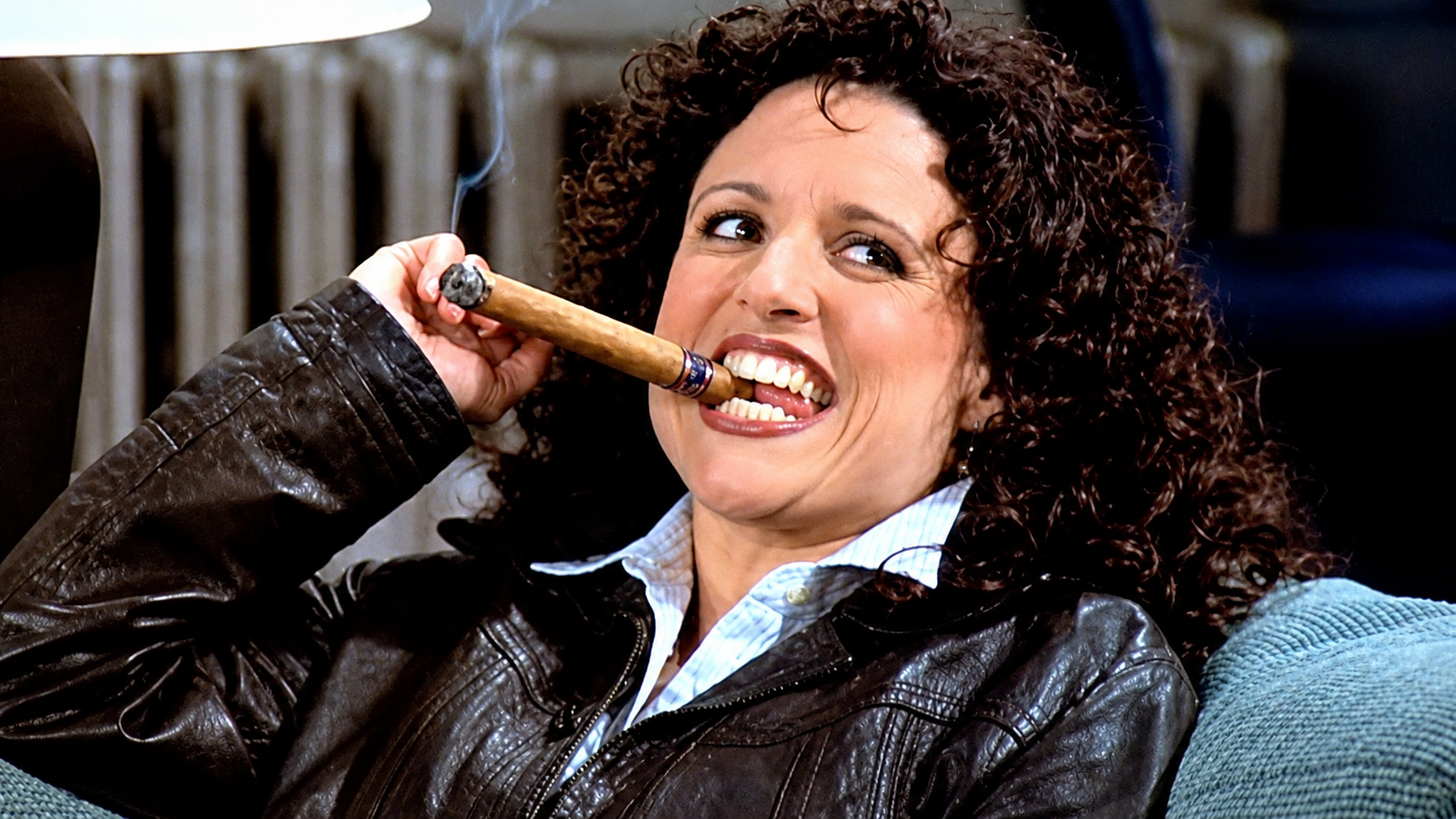
Recently, actress Julia Louis-Dreyfus made headlines after discussing what she believes is a troubling shift in American society during an episode of her podcast. Her comments were not directed solely at politics, nor were they presented as legal conclusions. They were observations about a culture that increasingly disputes facts, buries them beneath endless noise, and slowly chips away at public confidence in objective truth. One statement, in particular, resonated with many people. She suggested that throughout history, comedians are often among the first voices to feel pressure whenever criticism becomes less acceptable. Whether readers agree with her assessment or reject it entirely is their right. That freedom of opinion is one of the cornerstones of the First Amendment.
The larger issue, however, extends far beyond one actress, one podcast, or one administration.
The real question is whether Americans are beginning to lose something far more valuable than a political argument.
We are losing confidence that facts still matter.
Every day, Americans are bombarded with more information than any previous generation has ever consumed. News travels around the globe in seconds. Artificial intelligence can create convincing photographs that never existed. Videos can be manipulated. Quotes can be taken out of context. Rumors spread faster than corrections, and public opinion often forms before a single document has been reviewed or a single witness has been interviewed. Truth has become forced to compete with entertainment, and entertainment usually wins.
That reality places an enormous responsibility on journalism.
A newspaper should never exist to tell readers what they want to hear. It should exist to tell readers what can be verified. There is an important difference between those two missions. Journalism is not advocacy. It is not rumor. It is not social media. It is certainly not public relations for those in positions of power. Its responsibility is to ask uncomfortable questions, examine public records, verify evidence, and publish the truth regardless of who finds that truth inconvenient.
That responsibility has never been more important than it is today.
The First Amendment protects far more than newspapers. It protects every citizen’s right to speak freely, criticize government, peacefully assemble, practice religion, and petition elected officials. Those protections were never intended to shield only popular opinions. They exist precisely because unpopular opinions often need the greatest protection. History has repeatedly shown that once a society begins deciding which voices deserve to be heard and which do not, everyone eventually becomes vulnerable.
That does not mean America has lost its constitutional freedoms. It means Americans should never assume those freedoms require no vigilance. Constitutional rights are strongest when citizens understand them, exercise them responsibly, and refuse to surrender them simply because someone with whom they disagree becomes the target.
Perhaps the greatest danger facing our country today is not censorship itself. It is complacency.
When citizens become comfortable accepting accusations without evidence, due process begins to weaken. When rumors become more persuasive than verified facts, justice becomes more difficult to achieve. When emotional narratives replace objective reporting, the public loses the ability to distinguish truth from manipulation. None of those outcomes strengthens a free society.
They weaken it.
This conversation should never be reduced to Republicans versus Democrats or conservatives versus liberals. Constitutional rights do not belong to one political party. They belong to every American equally. The principles that protect one citizen’s speech today protect another citizen’s speech tomorrow. The same Constitution that defends opinions we celebrate also defends opinions we strongly oppose. That consistency is what separates liberty from selective freedom.
At the Grants Pass Tribune, we have long believed that credibility is earned, not assumed. Facts deserve verification. Public officials deserve scrutiny. Institutions deserve accountability. Individuals deserve fairness. None of those principles should ever change because a particular story becomes politically inconvenient or socially unpopular.
Readers should also expect something else from responsible journalism.
Humility.
No newspaper is infallible. Reporters make mistakes. Editors make mistakes. Honest journalism acknowledges those mistakes, corrects them, and moves forward with transparency. That process is entirely different from abandoning standards altogether. Verification still matters. Documentation still matters. Evidence still matters.
Without them, journalism becomes nothing more than opinion wearing the disguise of news.
America has endured extraordinary challenges throughout its history because its institutions, while imperfect, were built upon a common understanding that truth could be pursued, facts could be examined, and disagreements could ultimately be resolved through evidence rather than intimidation. That foundation should never be taken for granted.
Julia Louis-Dreyfus’ comments have generated headlines because they touched a nerve. Whether history ultimately proves her concerns to be justified remains to be seen. What should not remain in question is the importance of preserving a culture where evidence still carries more weight than rumor, where criticism is answered with debate rather than suppression, and where journalism continues to measure its success not by how many people agree with its reporting, but by whether that reporting is accurate.
The future of this nation will not be determined by whichever political party wins the next election. It will be determined by whether Americans continue believing that objective truth is worth defending.
Once facts become optional, freedom eventually becomes negotiable. History has demonstrated that lesson many times before. The question now is whether we are willing to learn from it before we are forced to repeat it.