


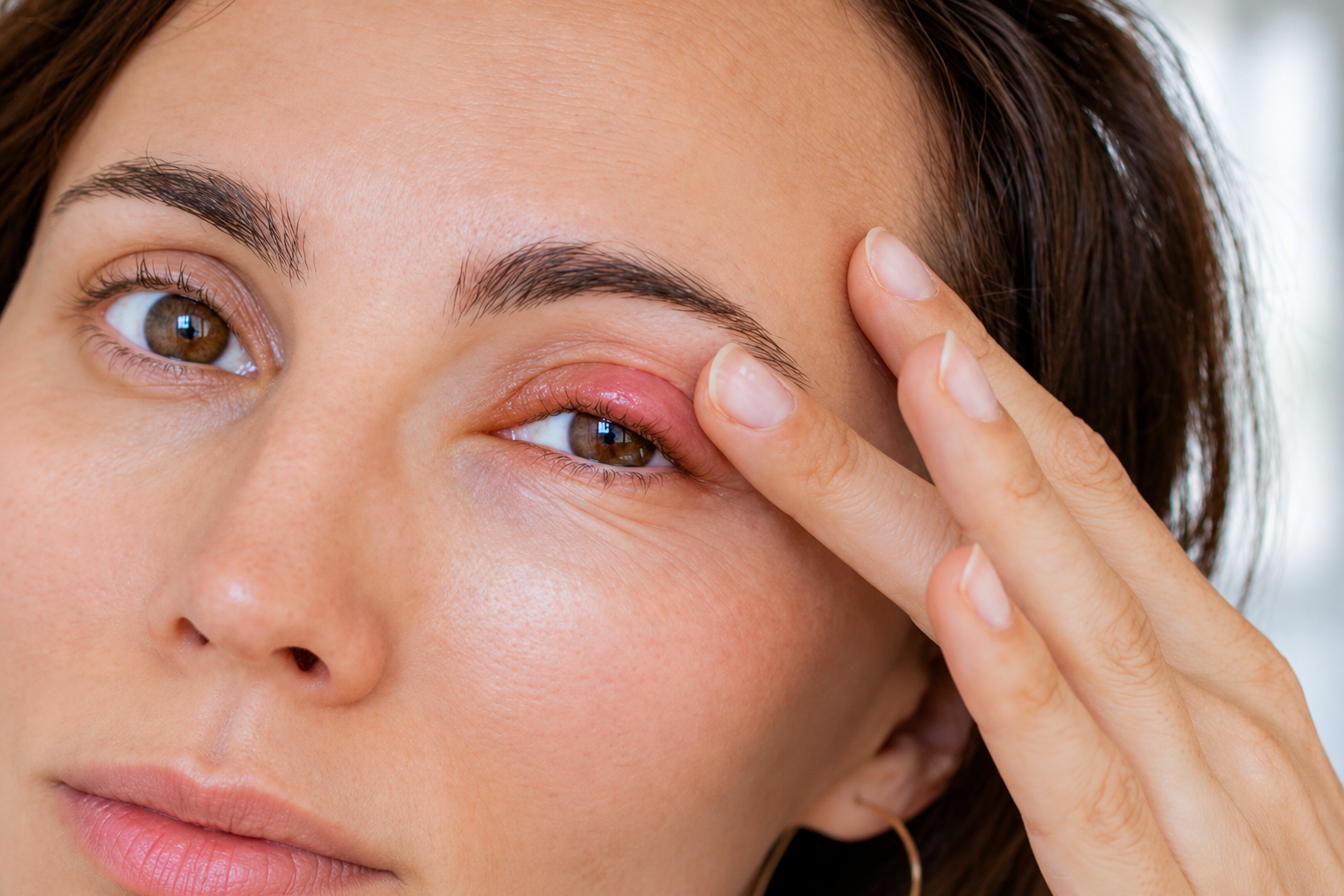
A painful bump along the eyelid can make blinking uncomfortable and leave the surrounding skin swollen and tender. For many people with an uncomplicated eye stye, recovery requires a clean, warm washcloth, gentle hygiene and several days of consistent care. Prescription medication and antibiotics are not always necessary, although worsening symptoms can require medical treatment.
A stye develops when bacteria infect an eyelash follicle or one of the small glands in the eyelid. The infection usually produces a localized, tender bump near the eyelashes or inside the lid. It may resemble a pimple and sometimes develop a yellowish center. Watering and irritation can accompany the swelling, but a simple stye should not impair vision.
Warm compresses are the primary home treatment. Moist heat can ease discomfort and encourage the affected area to drain naturally. Treatment begins with washing the hands thoroughly, soaking a clean washcloth in comfortably warm water and wringing out the excess. The cloth should rest gently over the closed eyelid for five to 10 minutes, three or four times daily.
Maintaining warmth throughout each session may require rewetting the washcloth as it cools. The compress should feel comfortably warm against the skin. Water that is too hot can burn the thin skin of the eyelid. A fresh, clean cloth should be used for each treatment, with separate cloths for each eye if both are affected.
Pressure does not improve the treatment. Squeezing, picking or puncturing a stye can spread infection and injure the surrounding tissue. Attempting to pull out an eyelash or open the bump with a needle also carries risks. If the stye begins draining on its own, fluid can be gently wiped away with a clean cloth dampened with warm water, without pressing on the swelling.
Keeping the eyelid clean helps limit irritation during recovery. Crust or discharge around the eyelashes should be removed gently, without scrubbing. Hands should be washed before and after touching the area, and rubbing the eye should be avoided. Towels and washcloths should not be shared.
Contact lenses and eye makeup should be set aside until the stye has healed. Glasses allow contact lens users to avoid additional irritation while the eyelid recovers. Makeup applied around an infected area can become contaminated, and eye cosmetics used during the infection may need to be discarded. Makeup brushes should also be cleaned.
Tea bags are frequently promoted as a natural treatment, but clinical evidence has not established that they work better for styes than a plain warm compress. Tea bags can introduce particles or irritate the eye. A clean washcloth provides warmth without adding plant material or other substances to the affected area.
Home treatment generally works over several days. Many styes begin improving within a few days and resolve in approximately a week, while some take one to two weeks to heal completely. Consistent care may support drainage and relieve symptoms, but an overnight disappearance should not be expected.
Not every eyelid lump is a stye. A chalazion forms when an eyelid oil gland becomes blocked and often develops into a firm lump that is less painful than a stye. Warm compresses may help loosen the blocked material, but a chalazion can persist longer. A lump that remains, repeatedly returns or develops in the same location should be examined by an eye care professional.
Medical advice is appropriate if a suspected stye has not begun improving after about 48 hours of home care, particularly if pain or swelling is increasing. That does not mean the bump must disappear within two days; the concern is a lack of improvement or a worsening course.
Spreading redness, swelling involving the entire eyelid or extending into the cheek, fever and severe pain require prompt medical attention. Blurred or reduced vision, pain when moving the eye, or difficulty moving it warrant urgent evaluation because those symptoms can indicate a deeper infection.
Although many localized styes heal without antibiotics, an infection that spreads may require prescription treatment. A persistent stye may also need professional drainage. Those procedures should be performed by a qualified clinician.
Regular handwashing, removing eye makeup before bed and keeping the eyelids and eyelashes clean can help reduce the risk of future episodes. People with recurring styes may have an underlying eyelid condition, such as blepharitis, or rosacea that warrants evaluation and an ongoing care plan.