


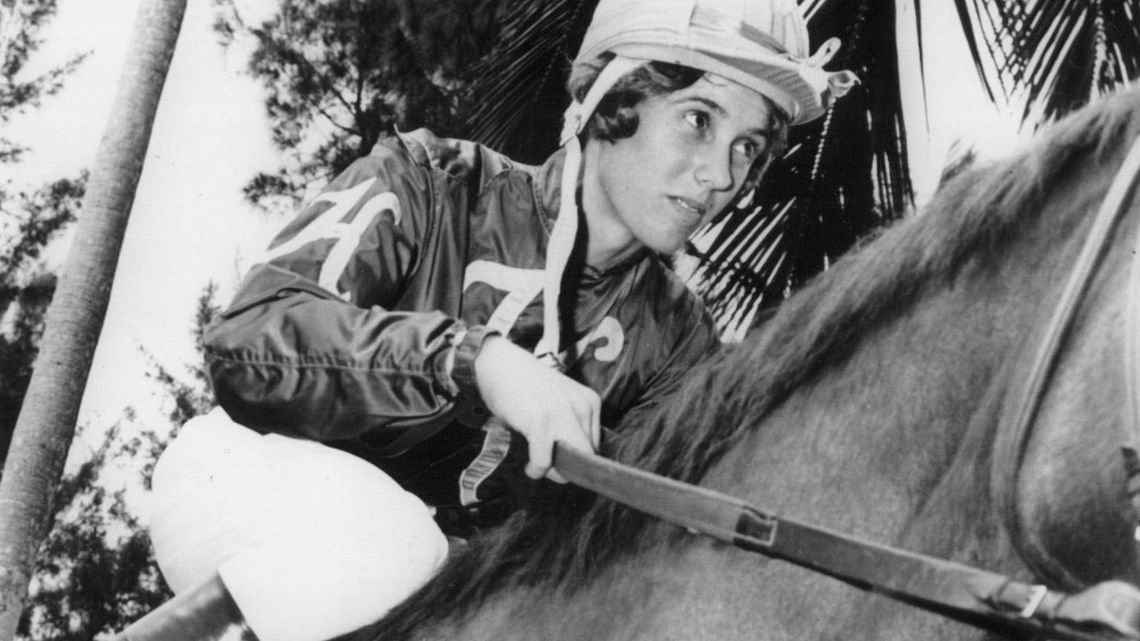
Diane Crump, a trailblazing jockey who reshaped American horse racing by becoming the first woman to compete professionally and later the first to ride in the Kentucky Derby, has died at the age of 77. Her death marks the passing of a figure whose determination and resilience helped open one of the nation’s most tradition-bound sports to women.
Crump died Thursday night in hospice care in Winchester, Virginia, following a diagnosis in October of an aggressive form of brain cancer. Her family confirmed that she was surrounded by loved ones at the time of her death.
Born in Milford, Connecticut, Crump developed an early passion for horses and racing at a time when the sport was overwhelmingly dominated by men and largely closed to women. That reality did not deter her. In 1969, she became the first woman to ride in a professional horse race in the United States, a milestone that drew national attention and controversy. Her debut at Hialeah Park in Florida was met with resistance from some in the racing world, including male jockeys who initially refused to compete against her, and from spectators who openly objected to a woman riding in a professional race. Law enforcement was required to escort her to the track, underscoring the hostility she faced simply for participating.
Despite that environment, Crump persisted, riding through the tension and finishing the race, an act that symbolized a broader challenge to long-standing gender barriers in the sport. One year later, she made history again by becoming the first female jockey to compete in the Kentucky Derby. In the 1970 Derby, she rode Fathom, finishing 15th, an appearance that cemented her place in racing history regardless of the result.
Crump’s career extended well beyond those landmark moments. Over the course of her time as a professional jockey, she recorded more than 200 career victories, riding at tracks across the country during the 1970s and 1980s. Her presence became more accepted as the years passed, though she often spoke candidly about the resistance and isolation she experienced early on. Her persistence, however, gradually changed attitudes and opened opportunities for other women to pursue careers as jockeys.
After stepping away from full-time riding, Crump remained deeply connected to the horse racing world. She worked as a trainer and later founded an equine sales business, continuing to apply her knowledge and experience to the sport she helped transform. Her later years also reflected a quieter form of service. She volunteered in animal-assisted therapy programs, bringing comfort to hospital patients and nursing home residents alongside her dogs, a role that reflected her lifelong bond with animals.
Crump’s legacy has been formally recognized within the racing community. Her riding boots and memorabilia are displayed at the Kentucky Derby Museum as part of an exhibit highlighting the struggle for women’s inclusion in the sport. She has frequently been cited as a foundational figure whose courage made it possible for future generations of female jockeys to compete at the highest levels.
Her death prompted an outpouring of recognition from across the racing world, with officials, historians, and fellow riders acknowledging her role in changing the course of the sport. While horse racing today includes women in professional ranks as a matter of routine, that reality traces directly back to Crump’s willingness to endure public hostility and institutional resistance more than five decades ago.
Diane Crump is survived by her family, including her daughter, Della Payne. Her life and career stand as a testament to perseverance in the face of entrenched opposition, and her impact continues to be felt every time a woman rides onto a professional track without question.