


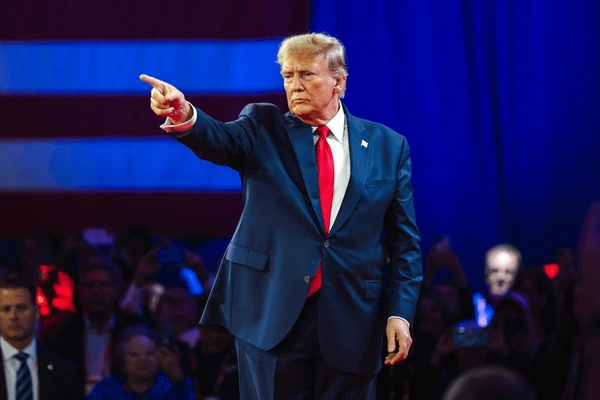
President Donald Trump has granted federal immigration agents full authority to defend themselves during enforcement operations, following a recent confrontation with protesters at an illegal cannabis grow site in California. The directive comes amid rising tensions between federal authorities and local activist groups opposing immigration enforcement actions tied to unlicensed agricultural operations.
The incident prompting the authorization occurred earlier this week during a U.S. Immigration and Customs Enforcement (ICE) raid at a large-scale cannabis farm in northern California. According to federal sources, agents encountered physical resistance from individuals who were allegedly attempting to obstruct the operation. Several protesters reportedly surrounded federal vehicles, threw objects, and interfered with officers making arrests.
In response, President Trump issued a statement authorizing federal immigration officers to take all necessary actions to ensure their personal safety and the successful execution of lawful operations. The authorization expands the discretionary power of agents operating in high-risk enforcement scenarios and follows previous administration efforts to bolster federal law enforcement presence in areas with elevated illegal activity tied to undocumented labor.
The cannabis farm in question is believed to have been operating without proper state or local licensing and is under investigation for potential human trafficking, labor law violations, and drug distribution offenses. Authorities allege that many of the workers on-site were undocumented immigrants who may have been exploited by the farm’s operators.
While the exact number of arrests made during the operation has not been released, officials confirmed that several individuals were taken into custody on immigration-related charges. The Department of Homeland Security (DHS) has also indicated that additional investigations are underway to determine the full scope of the operation’s violations, including potential links to organized criminal networks.
Critics of the enforcement effort have raised concerns about the use of federal immigration resources in what they view as a state-regulated industry. California legalized recreational cannabis in 2016, but unlicensed grow operations continue to proliferate across the state, many of which are suspected of using undocumented labor to avoid regulatory scrutiny and labor costs.
Immigration rights advocates argue that aggressive federal tactics disproportionately target vulnerable workers rather than the employers who exploit them. Some have also questioned the necessity of force in such operations, pointing to past incidents where enforcement actions have escalated into violent confrontations.
Supporters of the president’s decision argue that federal agents must be empowered to protect themselves in potentially dangerous environments, especially when facing resistance from large groups of individuals. They assert that illegal cannabis operations pose not only an economic threat to legal growers but also a public safety risk due to environmental damage, human trafficking, and ties to transnational crime.
As federal and state agencies continue to navigate the complex intersection of immigration enforcement and cannabis regulation, the latest directive from President Trump signals a hardening stance on illegal grow sites and the unauthorized labor often associated with them. Further details regarding the California operation, including the names of those arrested and the status of the investigation, are expected to be released in the coming days.