


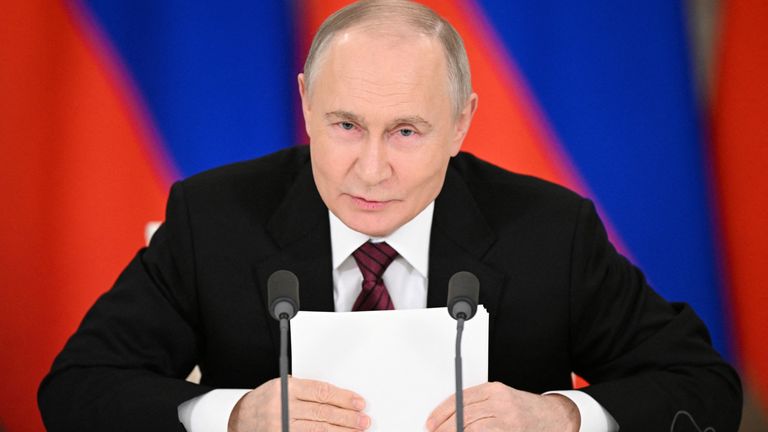
Reports confirmed Thursday that Russian President Vladimir Putin presented a set of demands during his recent meeting with U.S. President Donald Trump in Alaska, specifying what it would take for Russia to halt its ongoing military campaign in Ukraine. The high-level discussions, held less than one week ago, are said to have focused squarely on the conditions under which Moscow would consider ending hostilities.
The meeting, which brought the two leaders together on U.S. soil, has drawn widespread international attention. According to accounts of the talks, Putin made it clear that Russia’s willingness to cease military operations is tied directly to specific concessions. While the details of those demands have not been disclosed publicly in full, officials familiar with the exchange indicated that they centered on territorial recognition, security guarantees, and the future role of NATO in Eastern Europe.
Diplomatic observers note that the Alaska talks marked one of the most direct engagements between Moscow and Washington since Russia launched its full-scale invasion of Ukraine. Analysts suggest that Putin’s decision to outline explicit conditions reflects both Russia’s interest in shaping the conflict’s outcome on its own terms and its attempt to pressure the United States into brokering a resolution favorable to the Kremlin.
For the United States, the meeting placed Trump in a complex position as he sought to balance international calls for peace with longstanding American commitments to Ukraine’s sovereignty. While no formal agreements were announced following the discussions, the fact that Putin placed his conditions on the table signals a new phase in negotiations.
The international community continues to monitor the situation closely. Ukraine, which has endured years of intense fighting and widespread destruction, has maintained its position that any ceasefire or peace deal must involve the restoration of its internationally recognized borders. Western allies, including European Union members, have echoed that stance while warning against concessions that could undermine international law.
For now, the Alaska meeting underscores the growing urgency for diplomatic solutions as the conflict enters yet another year. Whether Putin’s demands will be met, rejected, or serve as a starting point for broader negotiations remains uncertain. What is clear is that the war’s outcome will depend heavily on the willingness of world powers to engage in direct and sustained dialogue, even as the fighting continues on the ground.