


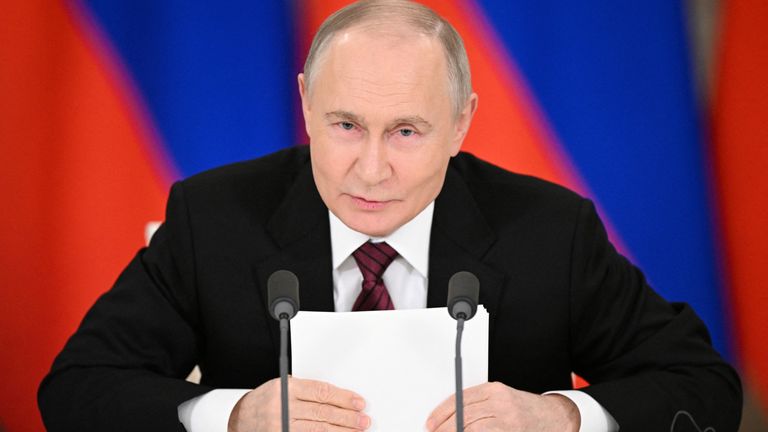
Russian President Vladimir Putin signaled his willingness to meet with U.S. President Donald Trump in the near future, as diplomatic discussions hint at the potential for renewed dialogue over the ongoing war in Ukraine. The announcement came after a Kremlin meeting between Putin and United Arab Emirates President Sheikh Mohammed bin Zayed Al Nahyan, underscoring Russia’s efforts to engage internationally amid its isolation from much of the Western world.
Yuri Ushakov, Putin’s top foreign affairs adviser, confirmed that preparations for a summit with Trump are underway, stating that a venue has been agreed upon “in principle” and that the meeting could take place as soon as next week. However, the Kremlin made it clear that Ukrainian President Volodymyr Zelenskyy will not be invited to the talks, despite the White House indicating that Trump would be open to including him in a potential peace summit.
Putin has consistently rejected Zelenskyy’s previous proposals for direct dialogue, maintaining a hardline stance that Russia will not negotiate with the current Ukrainian government unless it accepts Moscow’s terms. This latest development further signals that Moscow continues to view the conflict as a bilateral issue with Washington rather than one requiring direct negotiation with Kyiv.
The White House, while not officially confirming the summit, has expressed ongoing interest in finding a diplomatic path to end the war, which has now entered its third year. A Trump-Putin meeting could reshape the diplomatic landscape, especially given Trump’s past rhetoric suggesting he could end the war swiftly if re-elected in 2024.
The timing of the potential summit is notable, as it comes amid escalating tensions on the battlefield and renewed global scrutiny of Russia’s actions in Ukraine. It also arrives during a period of uncertainty in American politics, with Trump continuing to campaign for a return to the presidency while facing multiple legal challenges at home.
Ushakov declined to provide specific details about the summit’s agenda but emphasized that Russia is open to discussing a wide range of international security concerns. Still, Putin’s refusal to engage directly with Zelenskyy places limits on the scope of any peace proposal that might emerge from the talks.
Western analysts remain divided on whether such a summit would yield substantive outcomes. Some view it as a potential opening for peace, while others see it as a strategic move by Putin to gain legitimacy on the world stage and bypass Ukraine’s leadership entirely.
Regardless of the outcome, the summit—should it occur—would mark a significant moment in the evolving dynamics of the war in Ukraine and the broader U.S.-Russia relationship. With no official confirmation yet from the Trump camp or the White House, global attention now turns to whether this high-stakes meeting will materialize and, if so, what direction it might steer the future of the conflict.