


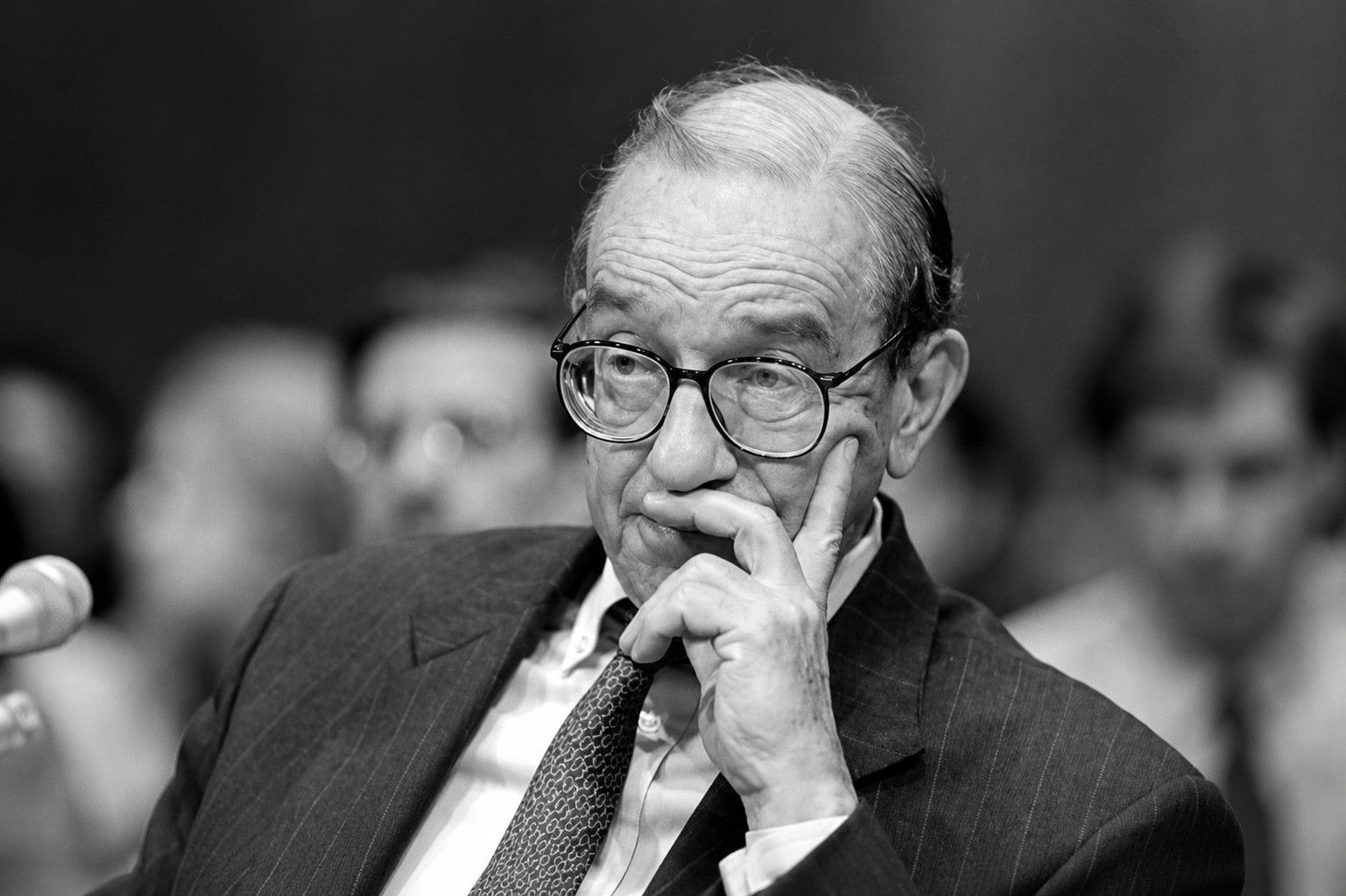
Alan Greenspan, the influential economist who served as chairman of the Federal Reserve for nearly two decades and became one of the most recognizable figures in global finance, has died at the age of 100. His passing closes a chapter in American economic history defined by decades of financial transformation, periods of sustained growth, market uncertainty, and some of the most consequential monetary policy decisions of the modern era.
Greenspan led the Federal Reserve from 1987 through 2006, making him one of the longest-serving central bank chairmen in the institution’s history. During his tenure, he served under four United States presidents—Ronald Reagan, George H. W. Bush, Bill Clinton, and George W. Bush—a rare distinction that reflected bipartisan confidence in his stewardship of the nation’s monetary policy during changing political administrations and economic conditions.
Born in New York City on March 6, 1926, Greenspan developed an early interest in economics that eventually led him to become one of the country’s foremost financial advisers. Before assuming leadership of the Federal Reserve, he built a successful career as an economic consultant and later chaired the Council of Economic Advisers during the administration of President Gerald Ford. His analytical approach and extensive understanding of financial markets established him as a respected voice in both government and private industry long before he became the nation’s chief central banker.
Only weeks after taking office as Federal Reserve chairman, Greenspan faced one of the most significant financial tests of his career when global markets were shaken by the October 1987 stock market crash known as Black Monday. The Federal Reserve responded by assuring financial markets that liquidity would remain available, helping restore confidence during a period of intense uncertainty. The response became an early defining moment of his leadership and demonstrated the increasingly active role central banks would assume during periods of financial instability.
Over the next nineteen years, Greenspan guided monetary policy through multiple economic cycles, including the recession of the early 1990s, the prolonged economic expansion that followed, the rapid growth of the technology sector, international financial disruptions in Asia and Russia, the collapse of the dot-com investment boom, and the economic consequences that followed the terrorist attacks of September 11, 2001. Throughout those events, decisions made by the Federal Reserve increasingly influenced not only the American economy but financial markets around the world.
Greenspan also became known for his carefully measured public statements regarding interest rates and inflation. Investors, business leaders, and governments closely followed his congressional testimony and public appearances, often interpreting even subtle changes in language as signals of future monetary policy. His observations regarding financial markets, including his warning about “irrational exuberance” during the technology-driven investment boom of the 1990s, became enduring references in economic history.
The years following his retirement brought renewed examination of policies implemented during his leadership. After the financial crisis of 2008, economists, policymakers, and financial analysts debated whether years of relatively low interest rates and limited financial regulation had contributed to conditions that preceded the collapse of the housing market and the broader financial system. Greenspan later acknowledged shortcomings in assumptions regarding the ability of financial institutions to regulate risk independently, an assessment that became one of the defining reflections of his post-public service years.
Despite continuing debate surrounding portions of his legacy, Greenspan’s influence on modern central banking remains significant. His tenure helped reshape how central banks communicate with financial markets, respond to economic disruptions, and balance inflation with employment and economic growth. Many of the institutional practices developed during his leadership continue to influence monetary policy discussions in the United States and abroad.
Alan Greenspan’s career spanned more than half a century of public service and economic leadership. His work shaped financial policy during some of the nation’s most consequential economic moments and left a lasting imprint on the operation of the Federal Reserve, the direction of American monetary policy, and the broader global financial system. His passing marks the end of an era for one of the most influential economic policymakers of the twentieth and early twenty-first centuries.